Chapter 9: Linden Dust and Mezuzah Scars
There are Linden Trees in L’viv, where my family lived before the Holocaust.
NOTE to my DAD: Don’t read this one — it’s about the Shoah. SKIP IT. Love you.
In L’viv today, if you know where to look, you can find scars on the doorframes.
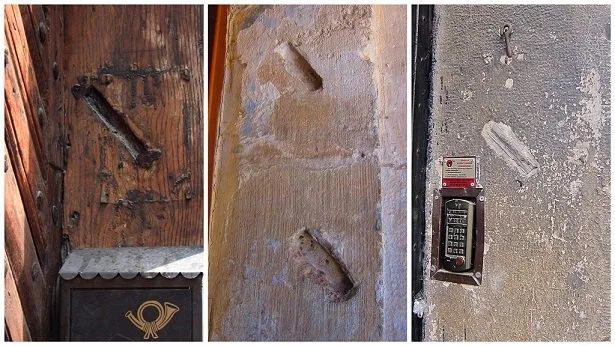
They’re angled slots, cut into stone or wood, where mezuzot used to hang — small cases holding a piece of parchment inscribed with verses from the Torah. When observant Jews passed through a doorway, they touched the mezuzah.
The scars remain.
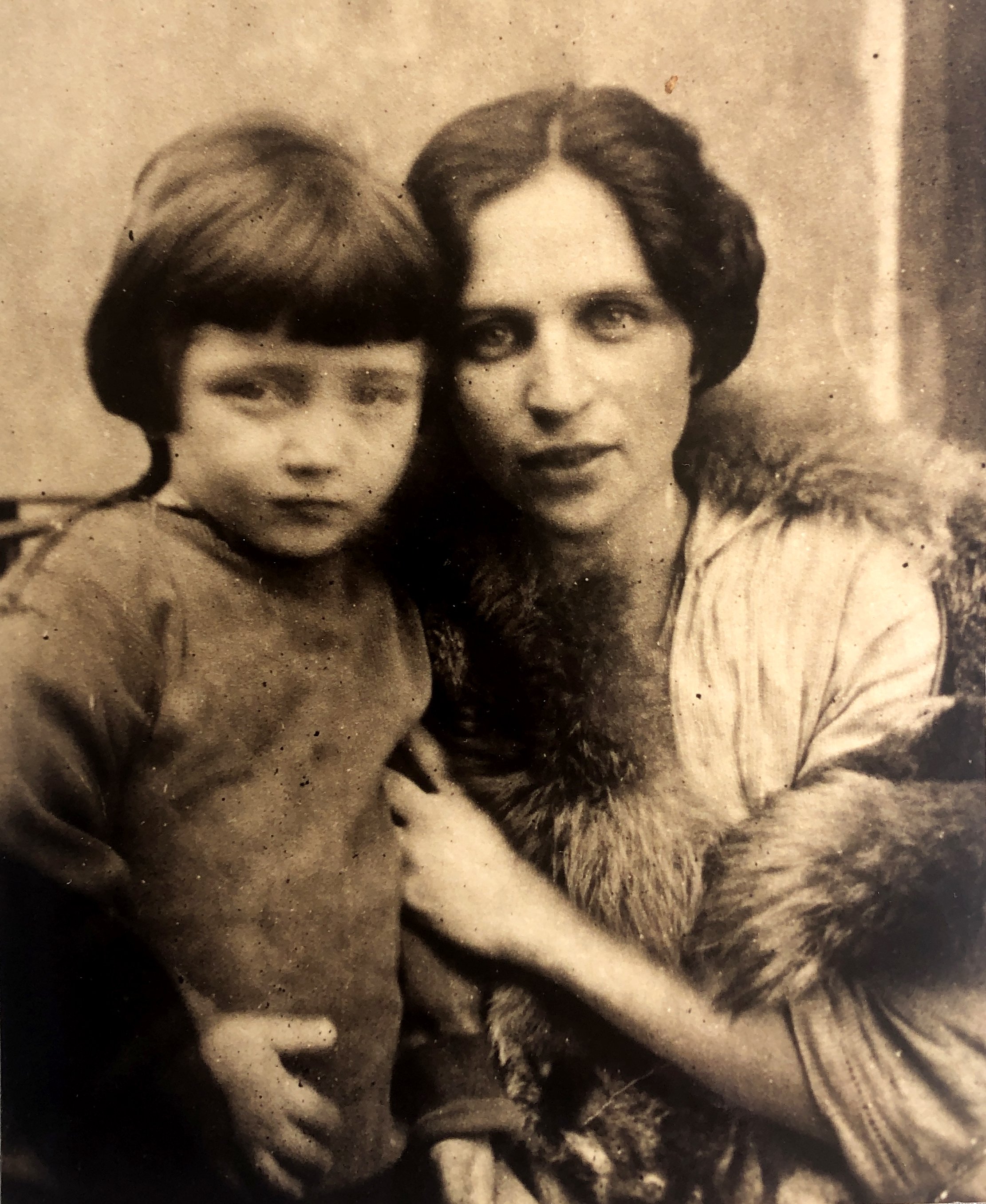
This is the first image I found when I opened the mysterious box my mother had hidden in the basement. It took me a while to figure out who it was. My great-grandma Felicia with her youngest daughter, Hanka, who would grow up to spy for the resistance.
This is the first photograph I found when I opened the box my mother had hidden in the basement. My great-grandmother Felicia, with her youngest daughter, Hanka.
I had never seen her face before. Most Holocaust survivor families don’t have photographs. This is a treasure.
And deeper in the box, I found this—the image her son, my grandpa Ben, carried with him all his life.
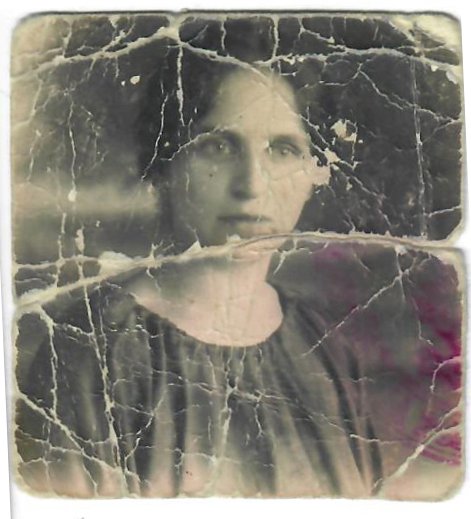
My grandpa carried this picture of his mother.
When Felicia became sick and died suddenly, Ben was twelve. All her children were scarred.
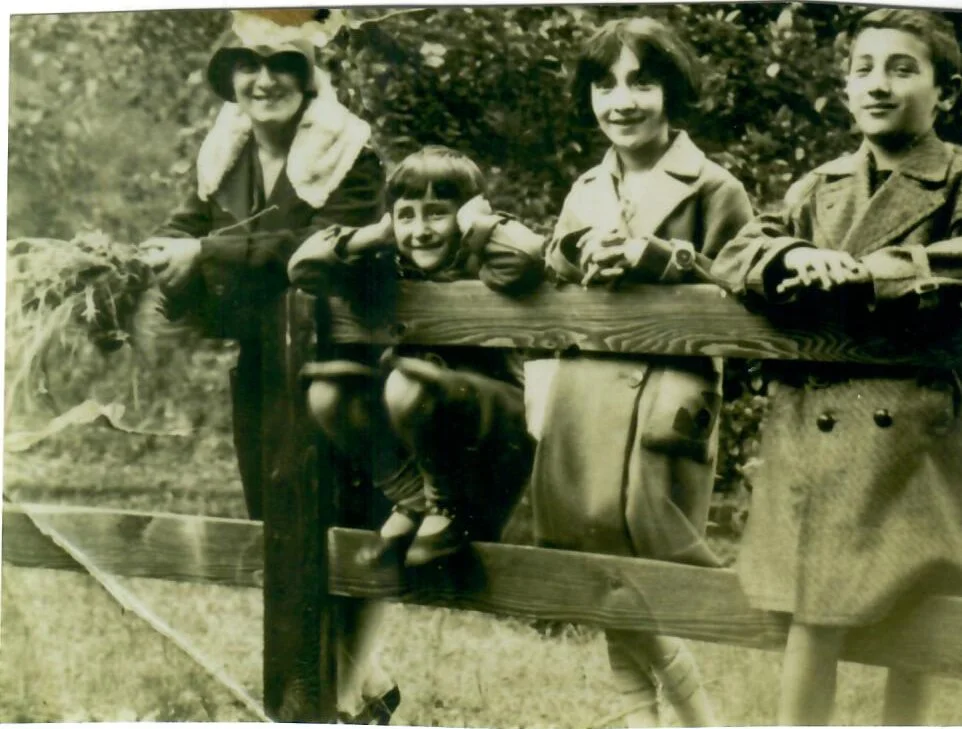
My great-grandmother, my aunt Hanka, my aunt Yanina and my grandpa Ben, before the war.
The City
Before, there was Lwów.
My great-grandpa Szymon was a celebrated mathematician and educator. He authored of a five-volume textbook series used in schools across Poland. He’d published a research paper at twenty-seven that can be found in the Einstein Papers today. He won a Polish national medal for his service to education.
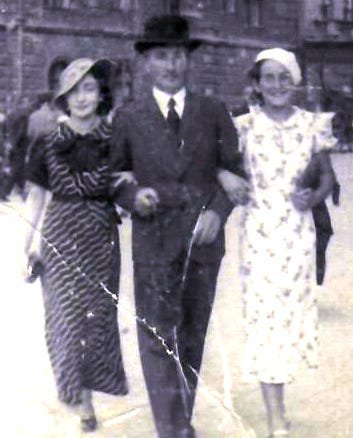
He loved the city. Lwów was ancient, intellectual, cosmopolitan. The family had a home. The children went to school. Szymon taught. For a time, they thrived.
Removal
Jewish people in Lwów lived as second-class citizens even before the occupations. Schools were segregated. Universities had “ghetto benches” — designated seating in the back, for Jews. Jewish people were excluded from many professions.
Throughout the 1930’s, rising antisemitism stoked by Nazi rhetoric made it increasingly dangerous for Jewish people all over the world.
Then the Soviets came.
In 1939, the Molotov-Ribbentrop Pact handed Lwów to the Soviet Union. Szymon was fifty-two. His children were in their teens and twenties. He had remarried and had twin babies.
The Soviets allowed Szymon to keep teaching. But they forbade him to be a Jew. No Yiddish. No Hebrew. No mention of Judaism. They forced the family to live in one room of their own house, and filled the rest with Communist strangers from the east. There were spies in every building. People were pressured to report on neighbors, on family members.
Suddenly, there were food and supply shortages. People turned to black markets to feed their children while trying to avoid being detained by the NKVD, the Soviet secret police, whose detainees soon filled the prisons.
Ignacy Chiger wrote in his memoir Under the Lightless Sky:
“Through spiritual humiliation and degradation of personal dignity in everyday life - at home, outside home, at work, at school, among strangers, among friends, and even within one’s family - both Soviet and Nazi terror aimed at physical annihilation...”
Chiger continues, in his remarkable memoir:
“…yet the Soviet Union never used the word “overtake” or “occupy”; quite to the contrary, it portrayed itself as an invited guest, a protector asked for help by the “oppressed” inhabitants…
Our “friends” arrived in Poland almost in rags; they resembled an army of marauders rather than an undefeated armed force, as they used to call themselves. They came with great propaganda, singing and dancing on Lvov streets and squares. They formed passersby into groups of listeners and explained to them that they, the Soviets, had come to give us freedom…”
The Trap
Why didn’t they leave?
The question haunts every family that lost people in the Holocaust. The answer is almost always the same: even if you had enough money to go, by the time you understood what was coming, the door was shut.
Under Soviet control, the only way out was east to Siberian labor camps. Szymon had twin babies and elderly relatives. The journey would kill them. And, he thought, Poland had been home to Jews for hundreds of years. Surely this would pass.
Meanwhile, Jewish refugees streamed into the city from the part of Poland the Nazis already occupied. The stories they told sounded like nightmares.
Szymon stayed optimistic. All he wanted to do was teach people math.
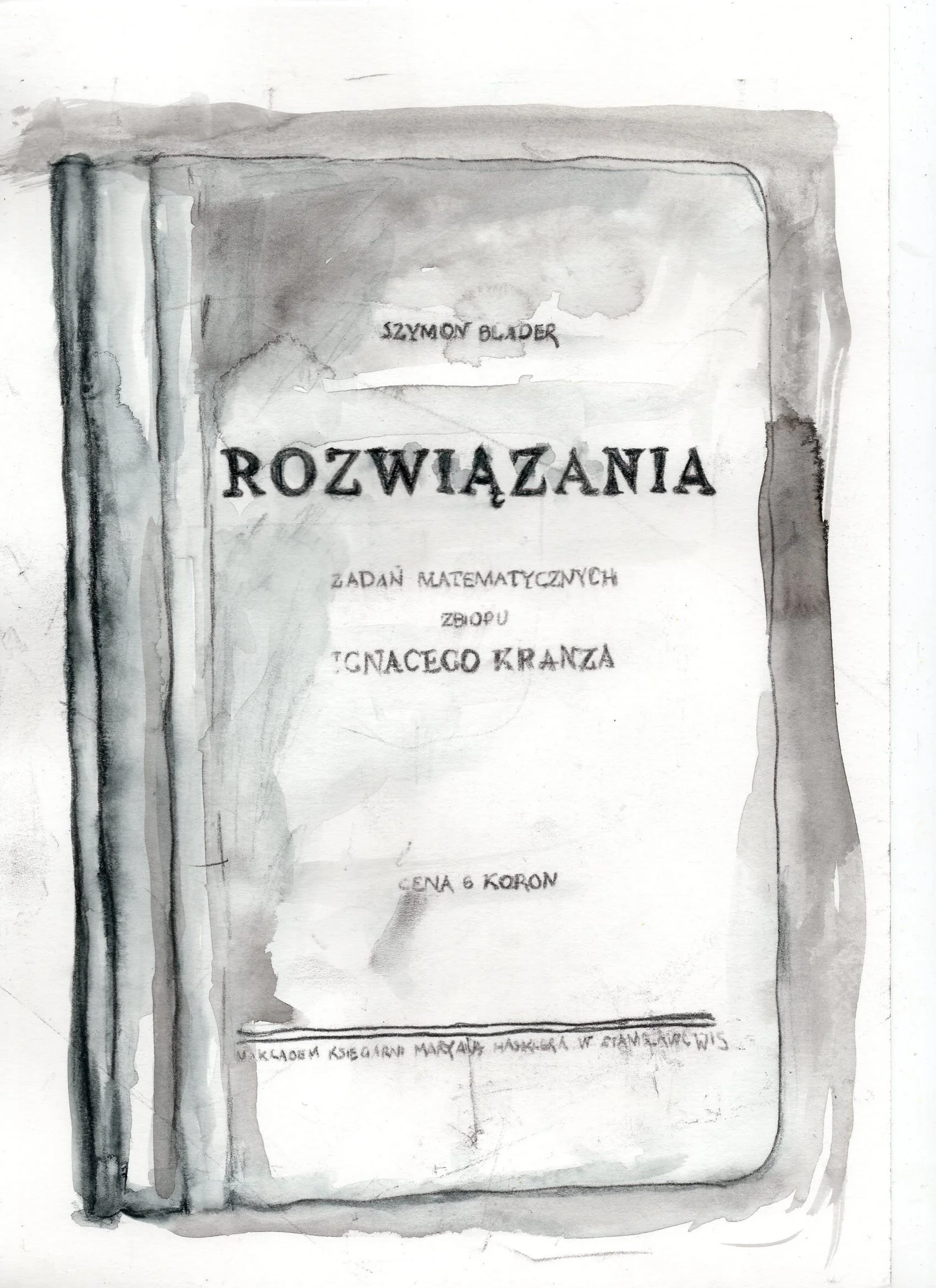
His five-volume series had multiple printings.
None of that would matter. Linden blossoms fell to the cobblestones and scattered like dust. Winter froze. Spring thawed.
And then the Nazis came.
June 1941
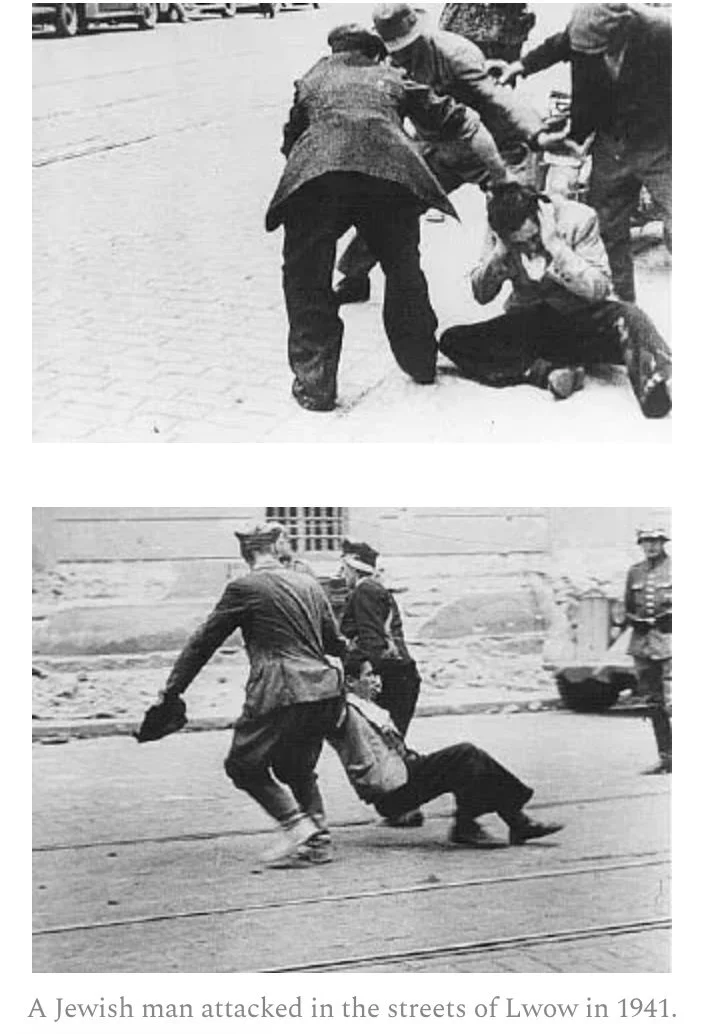
Within weeks, the doorframes of every Jewish home in Lwów were stripped bare.
A mezuzah contains the words of the Shema: “Hear, O Israel, the Lord is our God, the Lord is One.” Jews have been affixing them to doorposts for thousands of years, since the book of Deuteronomy, long before they were expelled from Judea — the land for which they are named.
The scars in L’viv’s doorframes are among the last physical traces of what was once one of the largest Jewish communities in the world.