Chapter 8: Book of Trees: Pine Meets Birch
Grandma painted only one place from memory.
For International Holocaust Remembrance Day: contains graphic descriptions.
Book of Trees is also on Substack.
I’ve been writing about objects I found in a box among my mother’s things after she died. One of the most surprising and tragic objects was this painting.
NOTE to my DAD: Don’t read this one - it’s about the Shoah. SKIP IT. Love you.
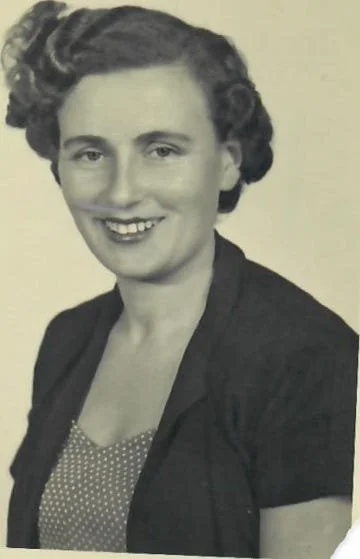
Grandma Rita (of blessed memory), after she survived the Holocaust and immigrated to the U.S.
My grandma Rita was a Holocaust Survivor. (All of the elders in my father’s family were. War-torn and haunted by the systematic murders of everyone they’d ever cared about, they’d all found each other and married each other and never let each other go.)
My grandma Rita was a creative artist. She embraced the world’s beauty - whether through her luscious clothing, her unparalleled cooking, or her painting. Once, she painted over the floral wallpaper in her bathroom, adding more detail to the blooms.
Watching her paint hypnotised me. I could sit behind her for hours while she chatted to me like a little red-haired Bob Ross. Now, I have her paintings hung around my house. Whenever I look at them, I feel like I’m having a conversation with her.
I loved Grandma Rita with the fierce, boundless heart of a little girl. So, I vividly remember her creating each painting, which parts she struggled with, and the images or setups she used as references. She would most often paint from photographs taken from contemporary wall calendars, merging a few into her unique compositions.
She especially liked to paint reflections in water.
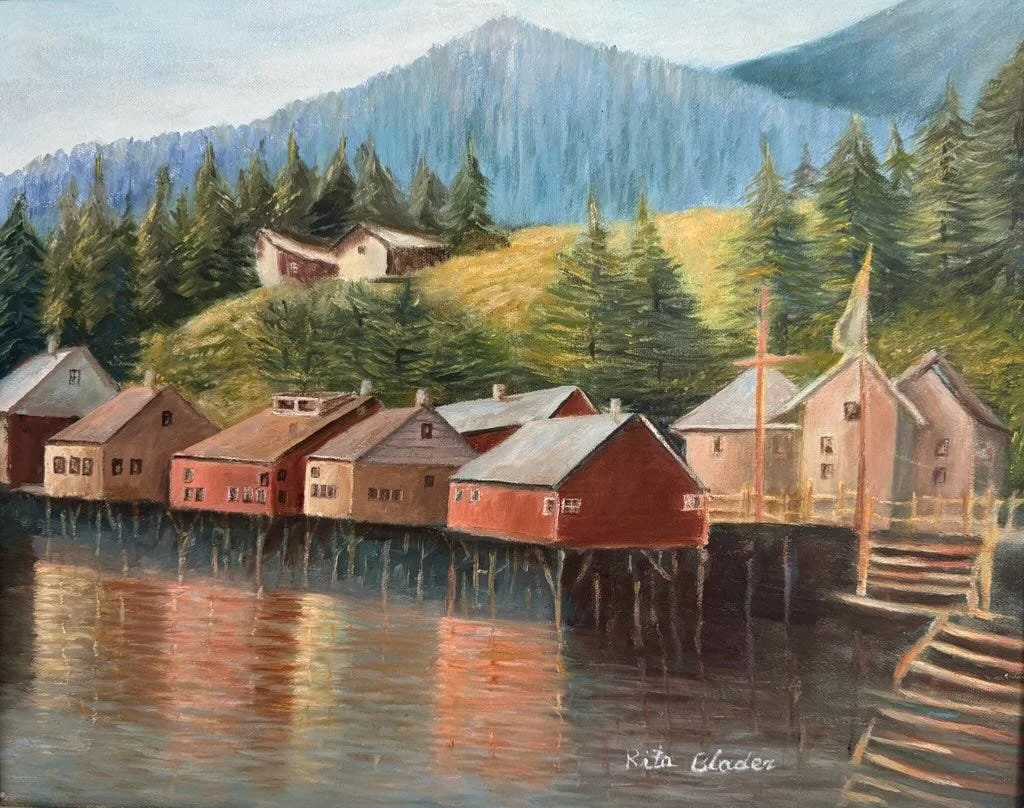
I remember she used a calendar image for this…and got frustrated by the reflections on the right.
Recently, I found a painting I hadn’t seen before with my mother’s things. My father says this one was his favorite. He thought it had been lost. It is so different from all her other works.
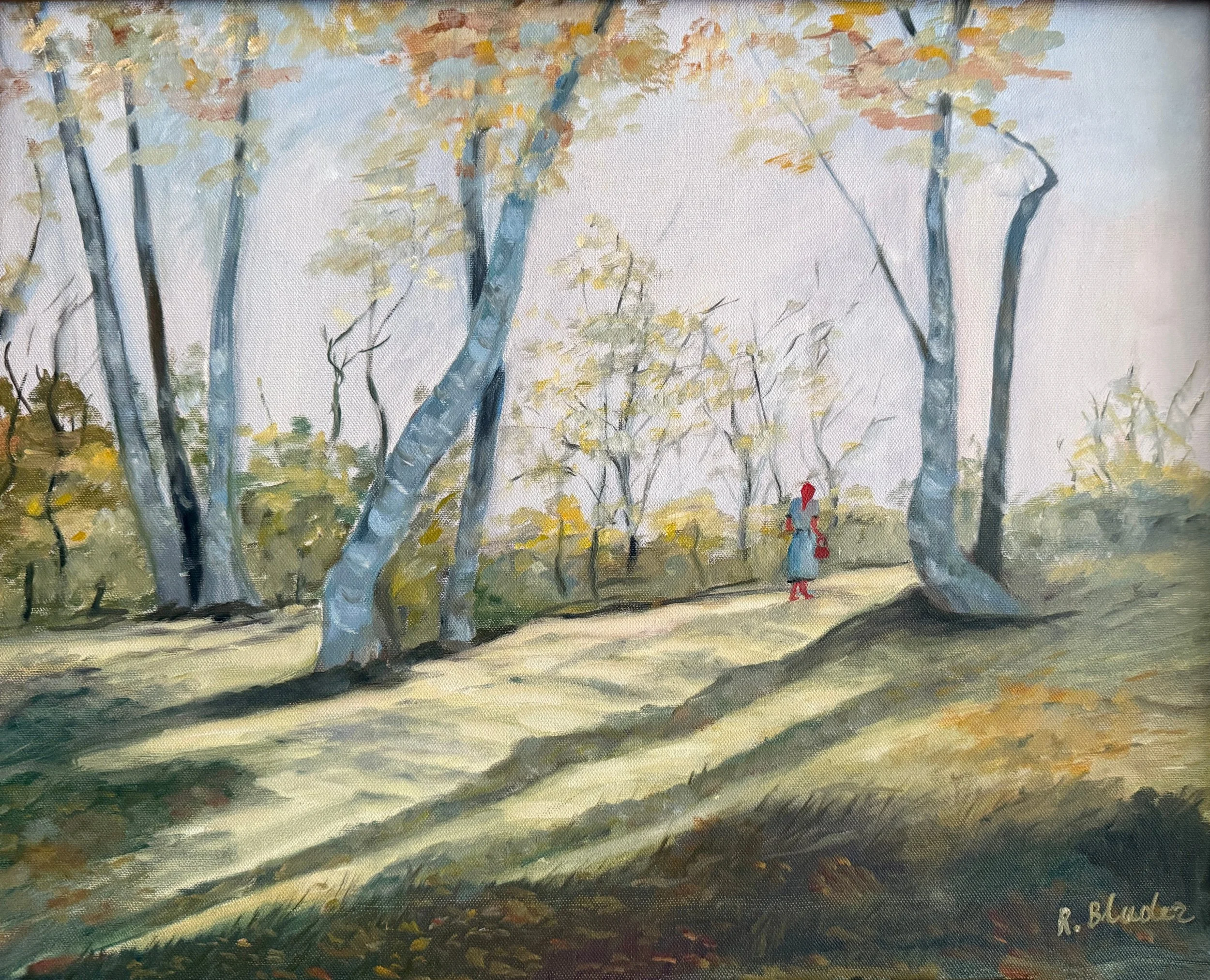
This is Rita’s only painting created from memory. I noticed three details.
It is her only painting that features a human being.
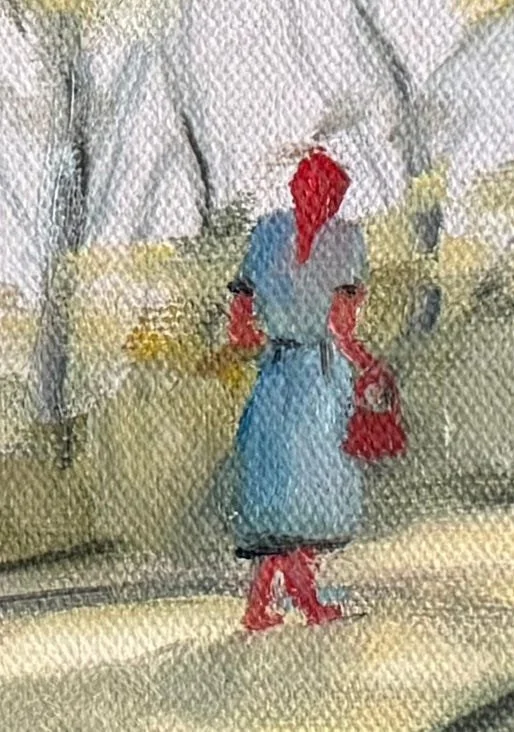
The person in the painting is wearing a headcovering and is dressed modestly, like women in Rita’s village would have been.
2. The woman in the painting doesn’t cast a shadow.
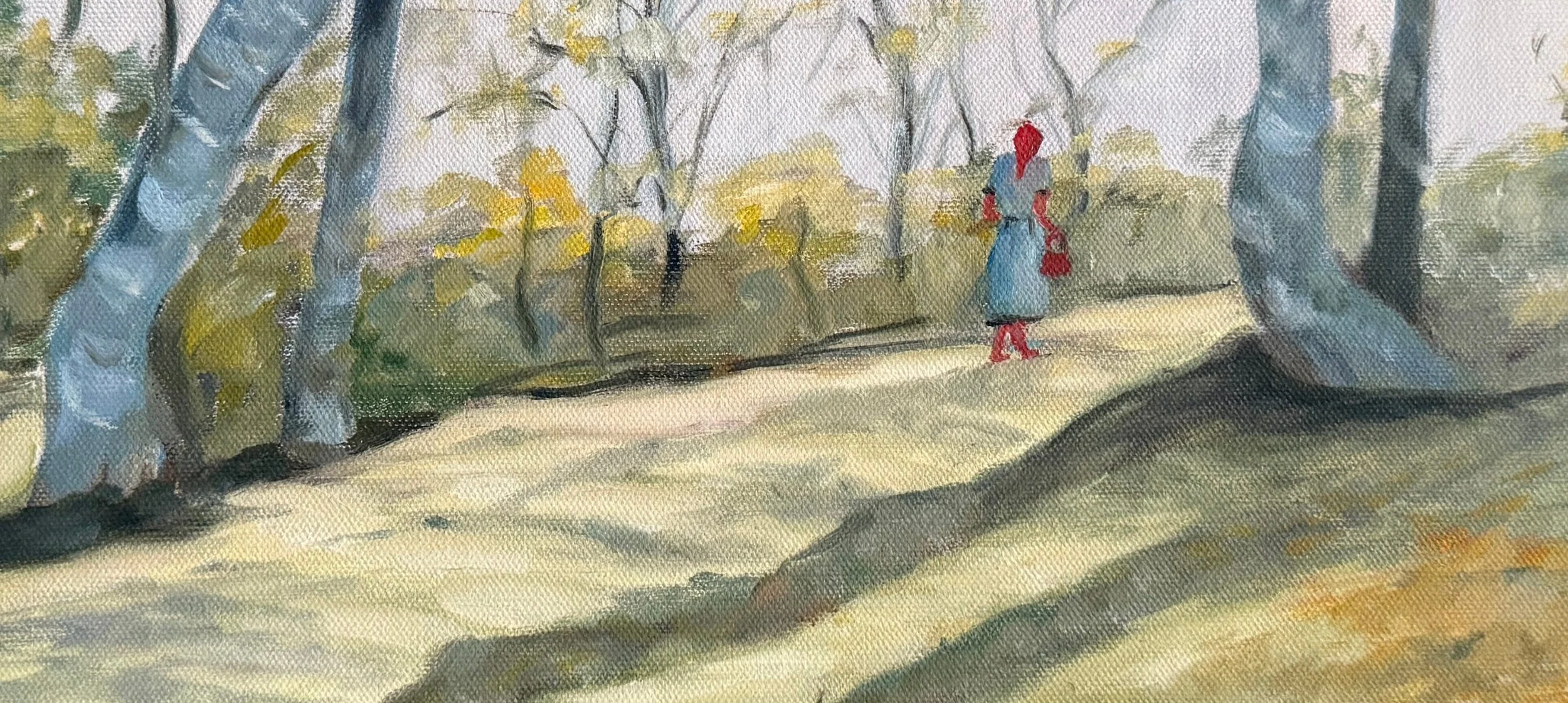
It is almost as if she is a ghost.
3. There is a shadow moving towards her.
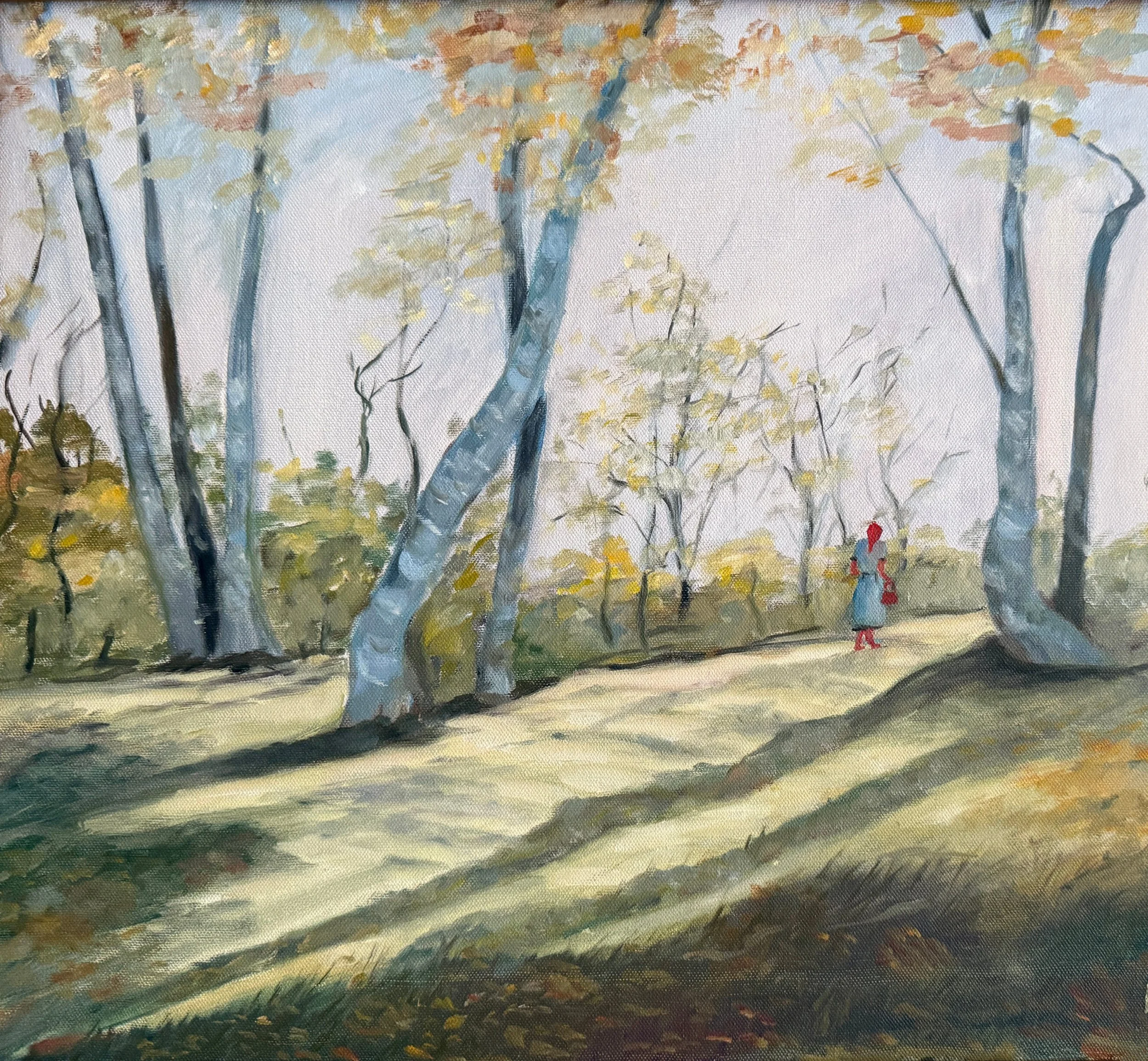
The darkness in the foreground isn’t a shadow cast by the trees.
This is a painting of the forest at the edge of the site of the Rokitno Massacre, where four generations of my grandmother’s family, including her infant sister and great-grandmother, were gunned down by the Nazi murder squads (or Einsatzgruppen) after nearly starving while incarcerated in a ghetto (a neighborhood turned into a prison).
From a survivor named Alex Levin: “We lived with constant fear and hunger and the anticipation of death…
These horrors came to a deadly resolution on August 26, 1942. German soldiers and German and Ukrainian police surrounded the square. They began by separating children, women, men and the elderly. The situation developed into fear and disorder. Soon, deafening screams and moans filled the square. People panicked. Children were clinging to their mothers. Everyone was trying to defend the old and the sick…
Anguished, people began to run for their lives. Men ran to find their wives and children. Everyone was trying to escape. Only bullets could stop them. The guards fired at the crowd and dozens of people were killed instantly, covering the square with blood.
…Witness accounts of the massacre say that the ground, covered with hundreds of bodies, was moving for days because people had been buried alive.”
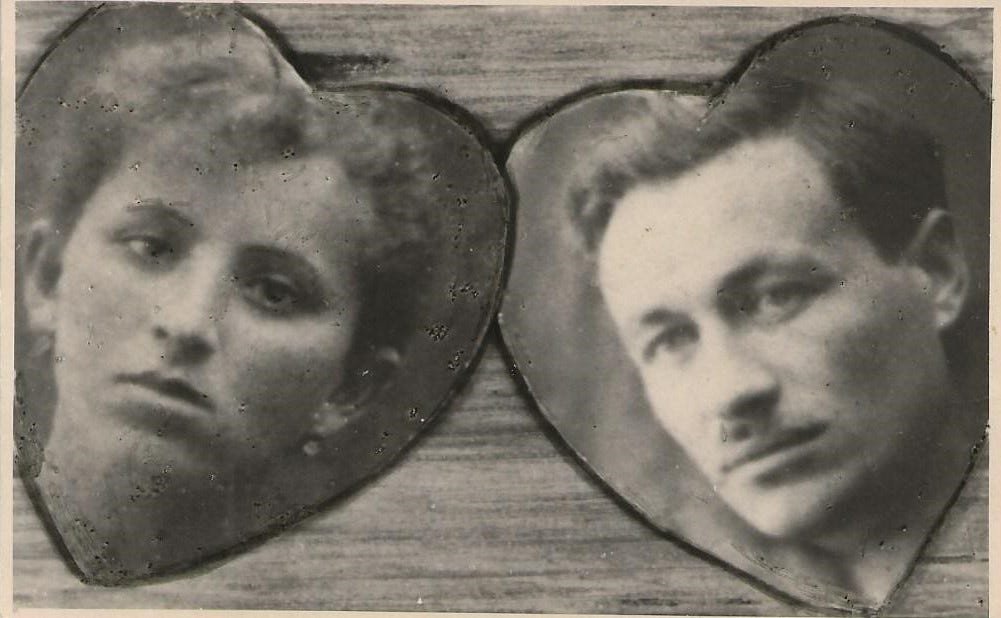
I found this in the box, as well, and it was the first time my dad and I had ever seen his grandparents’ faces.
My grandma and her sister Frieda escaped to the east on a cattle car because their parents told them to go. The pictures above are of my great-grandparents, Mirjam Landau Blezowska and Gershun Blezowska, from a locket they carried. Mirjam had family in Azerbaijan, and so the girls ran back that way. (Note that she wears earrings, and one of her daughters, nicknamed Masha, was named after her in the Sephardic tradition. )
Gershun, Mirjam, and their four younger children (including an infant) were lined up in front of a pit with their parents and grandparents fired upon. Mirjam’s body shielded her 9-year-old daughter, Masha, from the bullets, but everyone else died.
Masha survived two years alone in the forest until The Resistance found her and hid her.
After the war, my Grandma went back to Rokitno to look for her family.
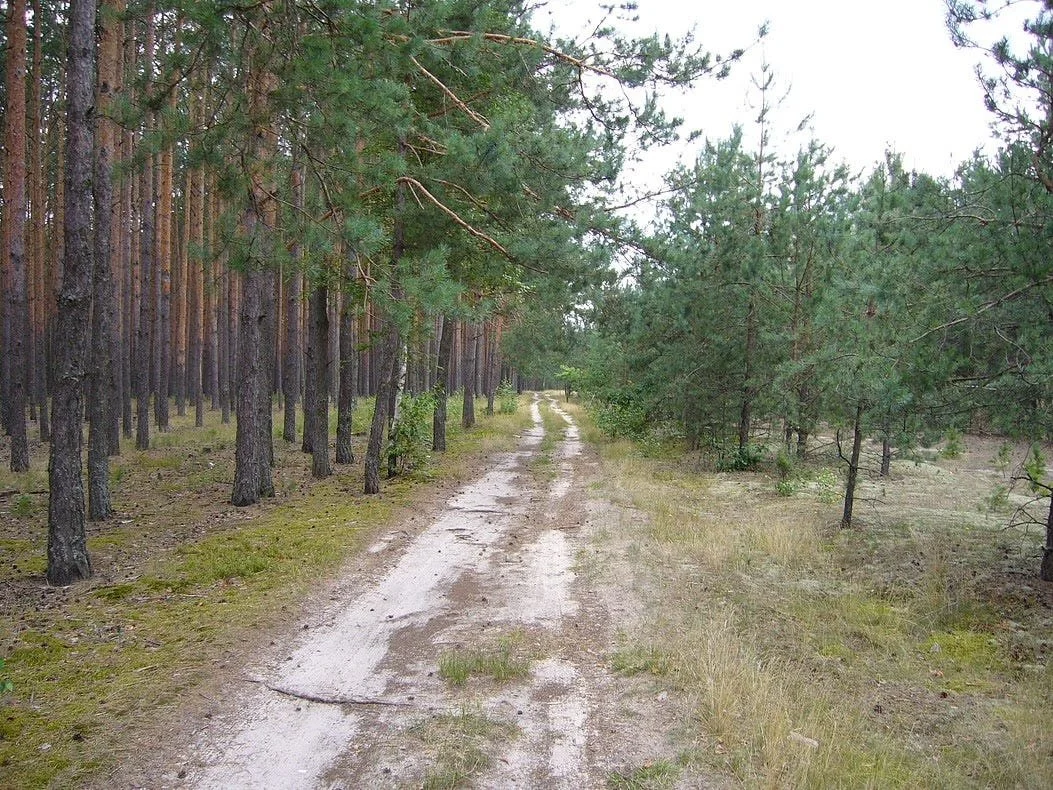
They were all gone.
All that was left was the edge of the forest, which my grandmother would later paint from memory sometime in the 1970s.
Later, waiting at the train station, my grandmother Rita noticed a teenager who tugged at her elbow nervously. This gesture reminded her of her sister.
“Masha?” she called.
The girl turned and flew into her big sister’s arms.
It was a miracle.
Masha traveled with my grandparents to a refugee camp, where Frida and her new husband had just welcomed a new baby, named Gershun after his grandfather.
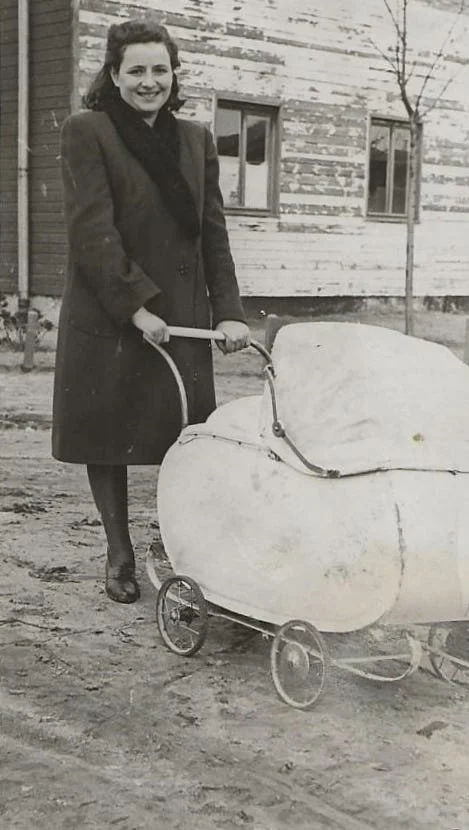
Frieda, of blessed memory, in the refugee camp with her baby (my beloved cousin, Gerry)
Frieda learned that almost everyone she’d grown up with was gone.
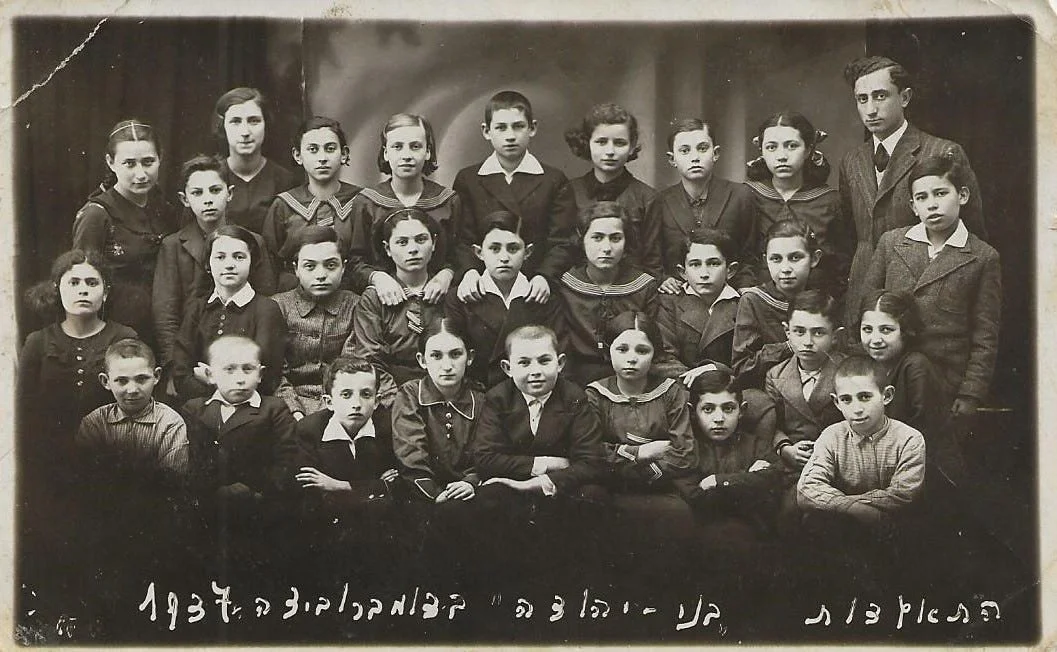
Frida’s school picture. All classmates are presumed murdered.
“As soon as the Soviet army had retreated … the peasants set on the tiny Jewish hamlets and began murdering Jews with unspeakable cruelty. Usually, in each band of peasants, there were two or three Germans who exploited the peasants' blind hatred of the Jews to incite them even more. I can still see the letter that my eighty-six-year-old mother sent me from my native town of Grzymalow in late June 1941. She wrote that my three brothers, her sons, and an eighteen-year-old grandson perished for Kiddush Hashem [Sanctification of the Name]. She wrote:
‘I do not understand it. Has God let me live so long only so that my old eyes will see my children rolling in their own blood? After all, these were the same peasants who used to visit us, often stayed for a night, traded with my children in a most friendly way, and now these very same peasants took my sons away and butchered them. Almost all the men in the township were shot that day.’
Where should one look for the root cause of this pervasive, terrible hatred?”
- David Kahana, Lvov Ghetto Diary, 1990
My auntie Frieda, who was the kindest person I’ve ever met, raised Masha as her own child.
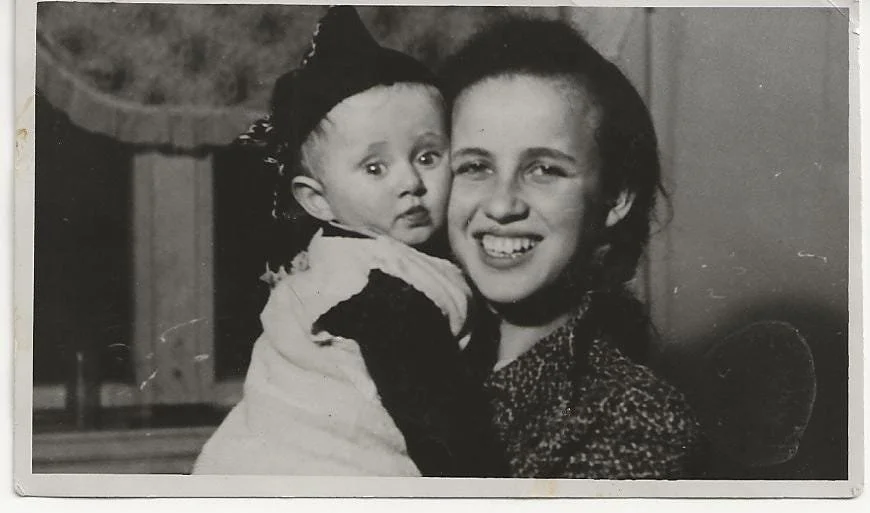
Gershun and Masha in the refugee camp.
There are so many remarkable stories about this family, my Dad’s family, but this is enough for one post. I love my family, and am proud of how resiliently they love life.
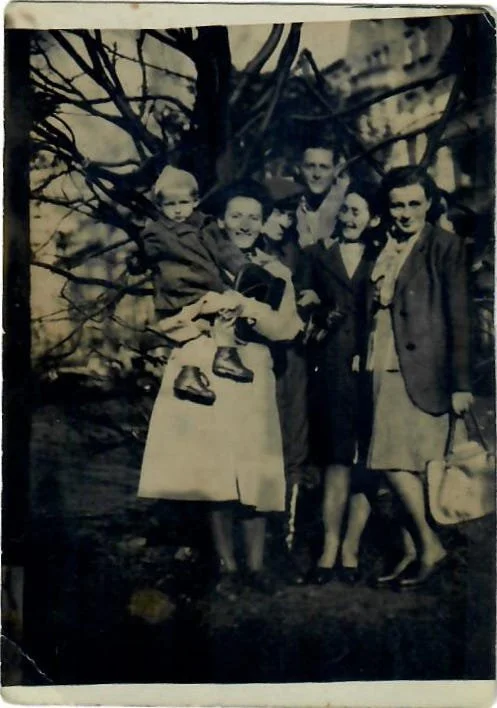
Gershun, Frieda, Leo, Masha, and Rita in the refugee camp.