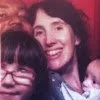
Chapter 7: Interlude: (The Pages in the Wall)
Part Two of the Book of Trees
Book of Trees on Substack
This box haunts me.
I live on a former military base the size of San Francisco. Starting in the 1860s, Fort Ord’s drill sergeants and cavalry commanders trained over a million soldiers, most of them drafted. Many shipped out to fight in WWII, the war that almost destroyed my family.
Now Fort Ord is abandoned.
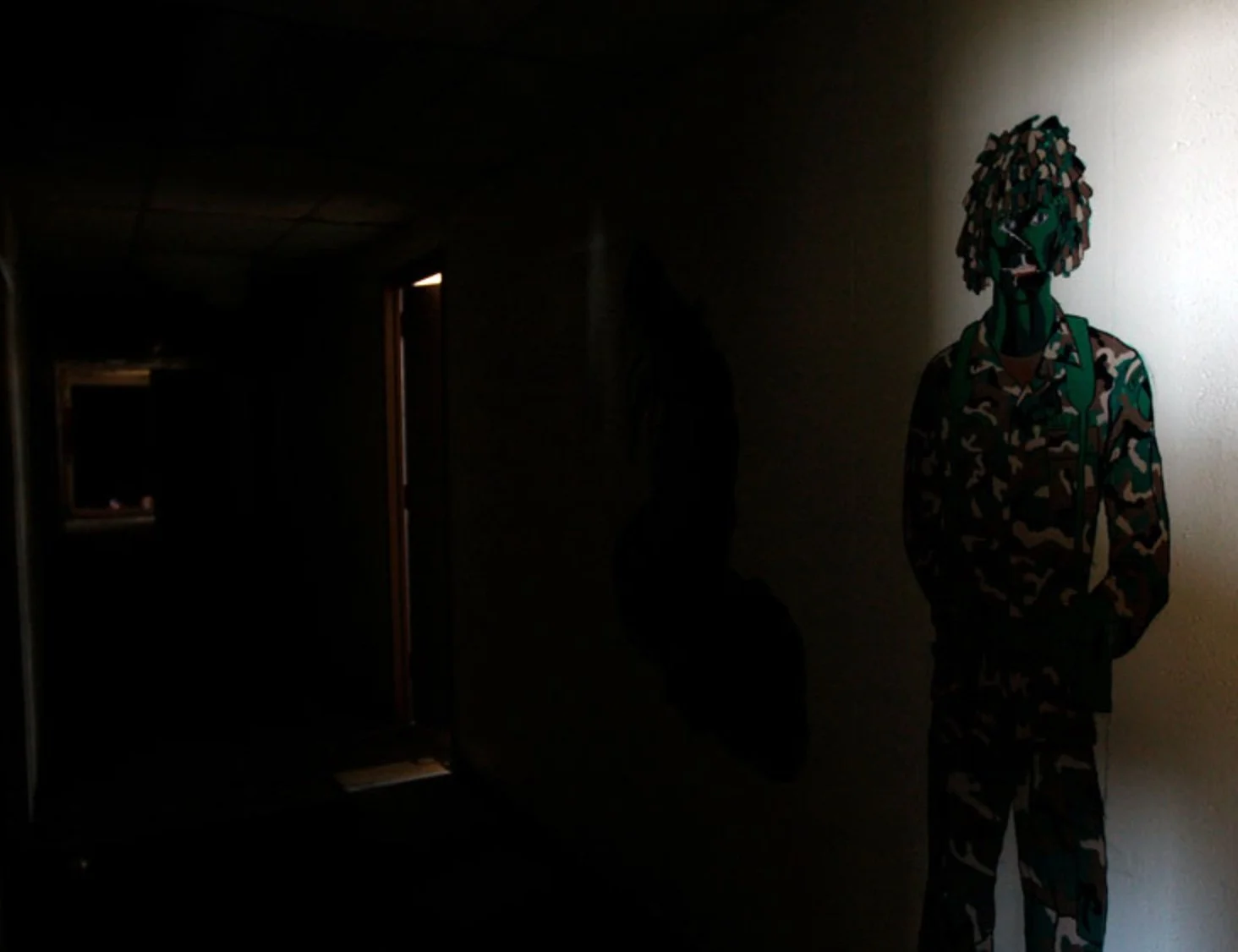
A soldier mural in an abandoned barracks at Fort Ord, CA, from PlanetOrd.com
I spent about ten years documenting these murals with my students. There is a secret perspective on the 20th century hidden in this place. Like the tunnels that run beneath everything here, these images are passages into a deep American history. Over the decades, waves of thousands of enlisted soldiers, amateur artists all, felt compelled to add new layers of words and images to these walls. The results are roughly painted palimpsests of the 20th century.
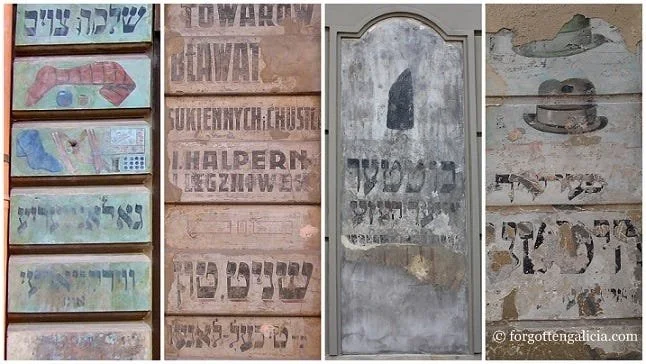
from Forgotten Galicia
The city where my father's family lived before WWII has palimpsests, too.It has had four names in a hundred years. The Poles called it Lwów, the Soviets renamed it Lviv, and the Nazis called it Lemberg. Now it's Lviv, Ukraine. Each occupation scraped away the one before.
Each occupying force tried to erase the culture of the last.
So, like Fort Ord, Lviv has wartime palimpsests too: called ghost signs. Long hidden under layers of plaster or paint, sometimes history resurfaces as palimpsests in Polish, Russian, German, Ukrainian, and Yiddish. You can see more here.
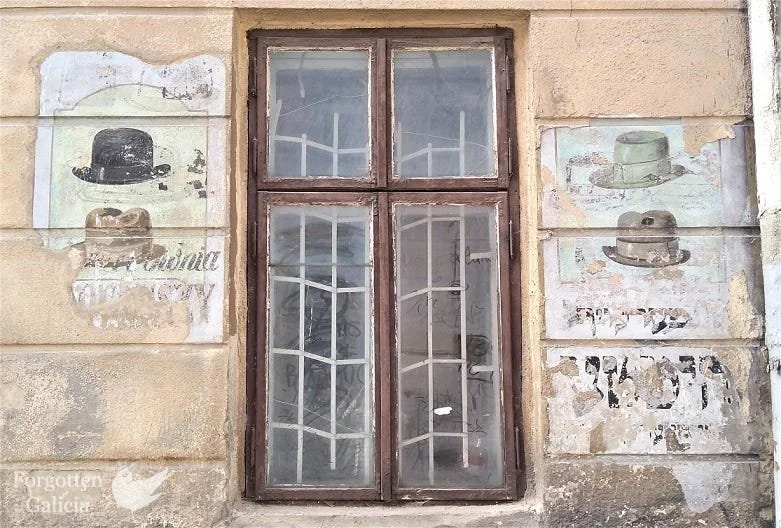
from Forgotten Galicia
When I saw this haberdasher ghost sign, I thought of this photograph.
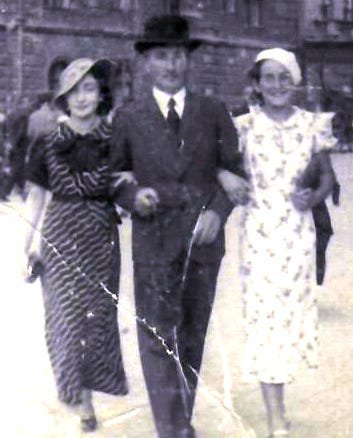
My great-grandpa, Szymon, with his two daughters, Yanka (Yanina) and Hanka (Anna).
My great-grandfather Szymon, the famous mathematician, walked with his daughters near this exact same hat shop in the Jewish quarter of L’wow.
One daughter would become a cultural luminary of Poland. One would spy for the resistance. Their father would be murdered.
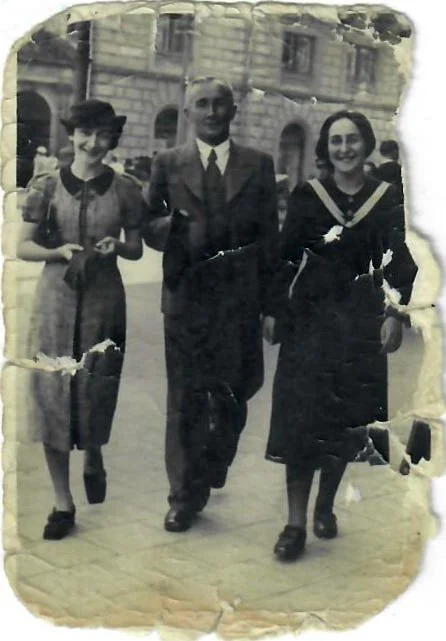
Hanka, Szymon, Yanka, 1938.
In Part One of this series, I followed my mother's family back through a brothel, a witch trial, a converso church, and the Barbary Coast.
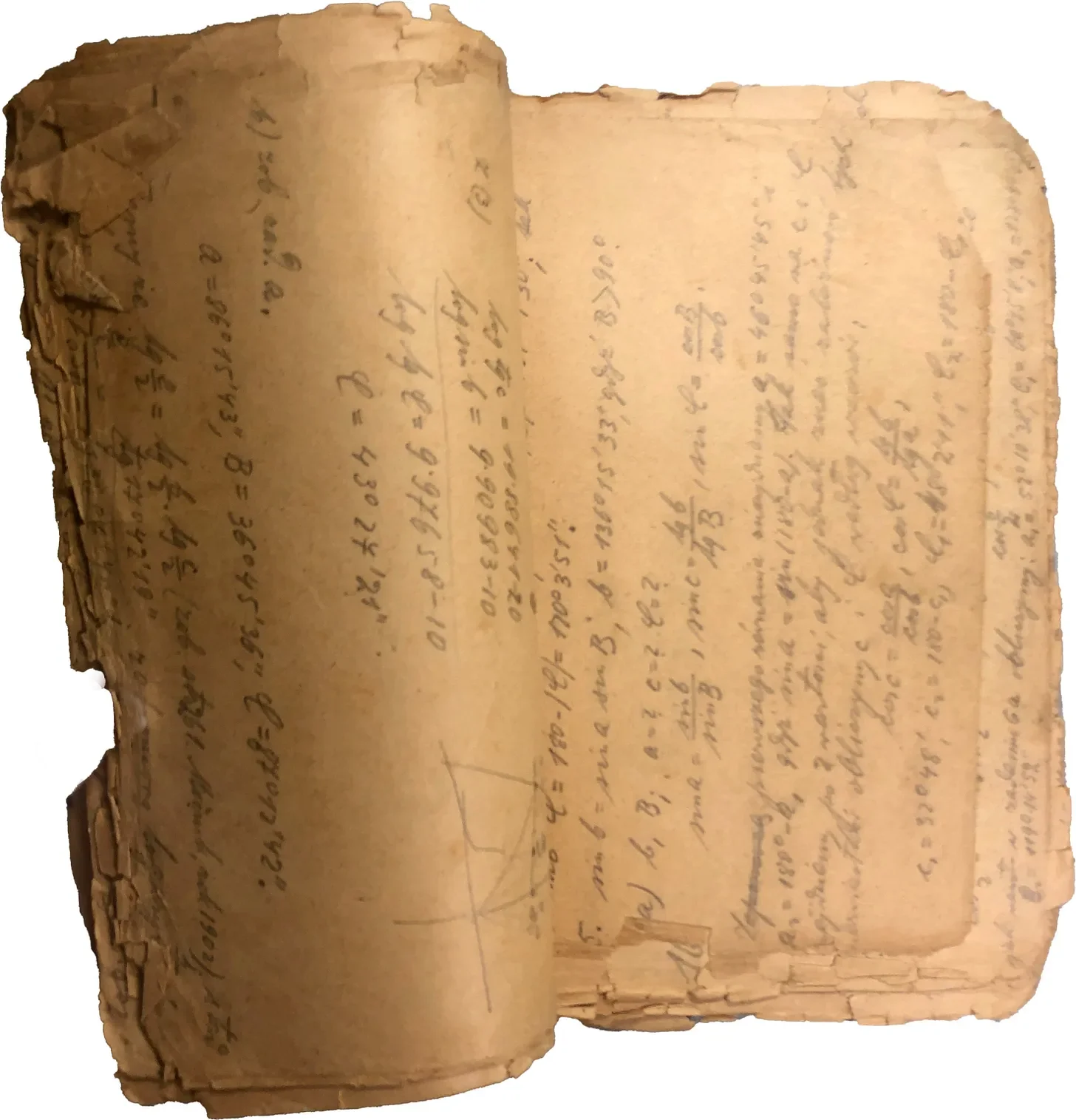
This is my great-grandfather’s final manuscript.
Now, as I turn to my father's side, the scale of destruction is difficult to comprehend. In the box my mother hid in the basement, I found a lost manuscript, written by my great-grandfather, Szymon Blader, while he was incarcerated in a death camp. It was his last work.
Hidden in a wall during the war, the pages were retrieved by his son, my grandpa, who risked his life to rescue and carry them across Europe to America, where they had been hidden for 60 years.
This week, I carry them across the country to the YIVO archive in New York, hopefully fulfilling my ancestors’ wishes: that their intellectual legacy be available to scholars.
As I write this, I’m finally understanding why I felt compelled to document all those Fort Ord murals. Those young soldiers, some of whom rescued my family, deserve to have their legacy recorded, too.
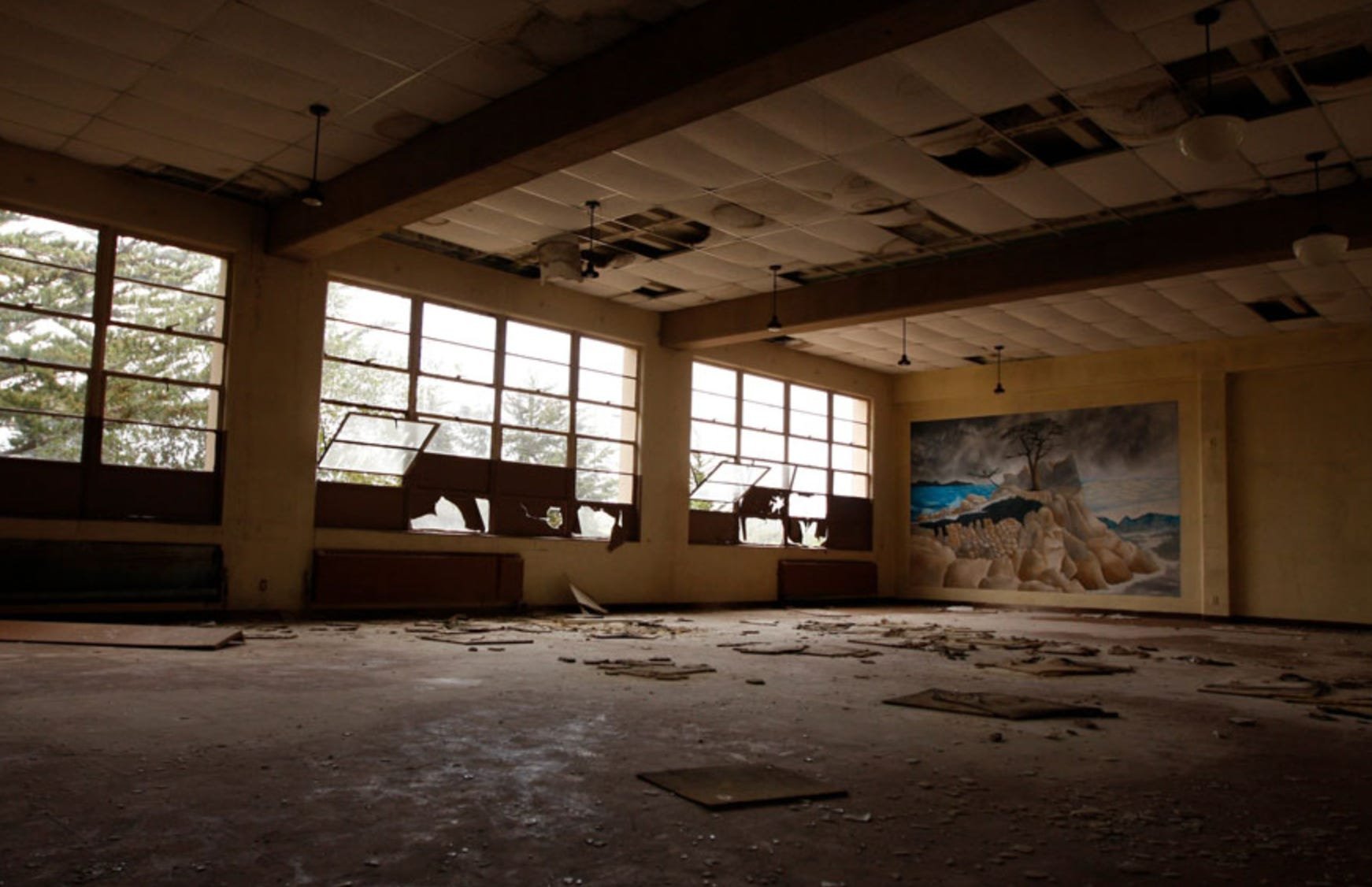
A soldier mural depicting The Lone Cypress,in an abandoned meeting room at Fort Ord, CA. PlantOrd.com
“A new life began …The normal world ceased to exist. What was left was only darkness.”
- Ignacy Chiger, who was also imprisoned in the Lvov Ghetto.
T