Chapter 10: Camera Obscura
The World the Nazis Made. Please take care.
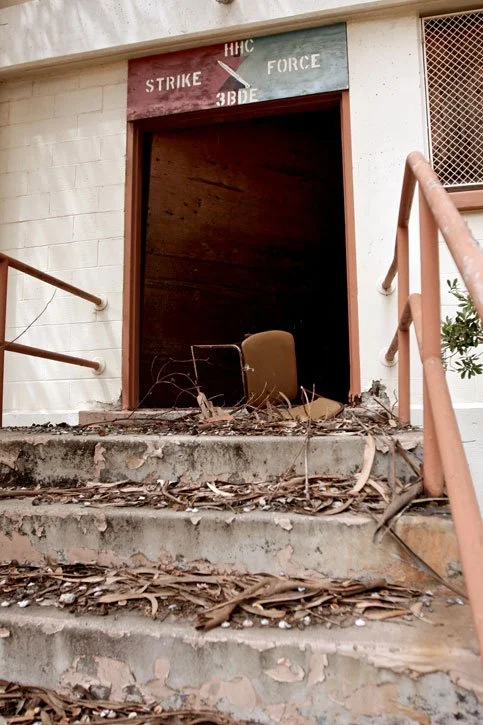
When exploring the abandoned military base where I live and work, I entered many enormous, completely dark, sealed rooms. No matter how many times I snuck into a building, it was instantly disorienting to walk from the world of light through an entryway and be plunged into a darkness that sounded, smelled, and felt like another world.
Once, I walked into a room that seemed full of ghosts. Beings flickered across the walls. Trees shimmered, upside down. Fort Ord’s buildings seemed alive again. My heartbeat was louder than the sea wind hitting the plywood that covered all the windows.
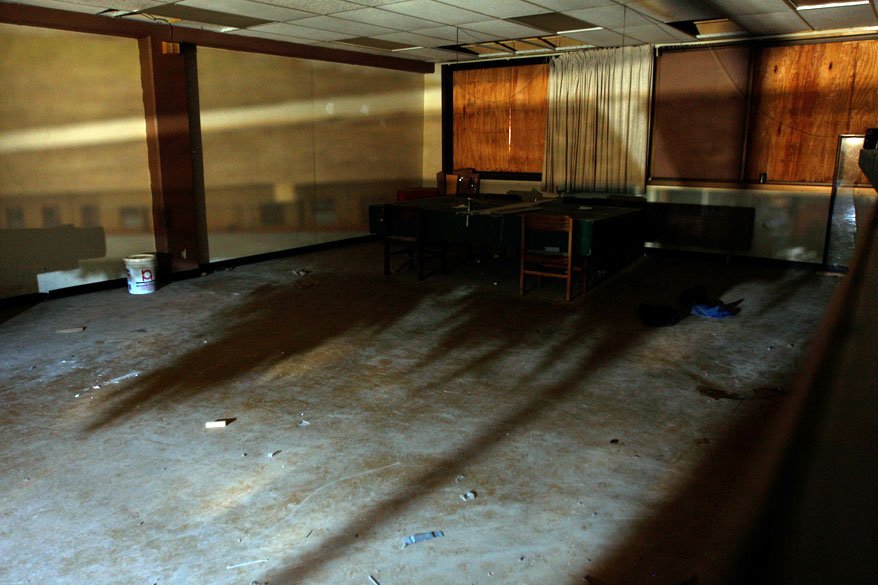
Ghostly projections on the walls.
After catching my breath, I realized I was inside a camera. A small knot in the boards had been blown out, creating a pinhole. A beam of light pierced the darkness, throwing a projection of the world it knew.
I stayed in there a long time, thinking about wars and ghosts. All that’s lost and all that’s left.
A camera obscura shows you the world, but inverted. That’s how the Holocaust reaches a family three generations later. You don’t see the whole thing. You see what came through the pinhole: a photograph carried in a pocket, a registration card, a sentence someone repeated once.
The rest is dark. But present. Holocaust survivor descendants carry shadows.
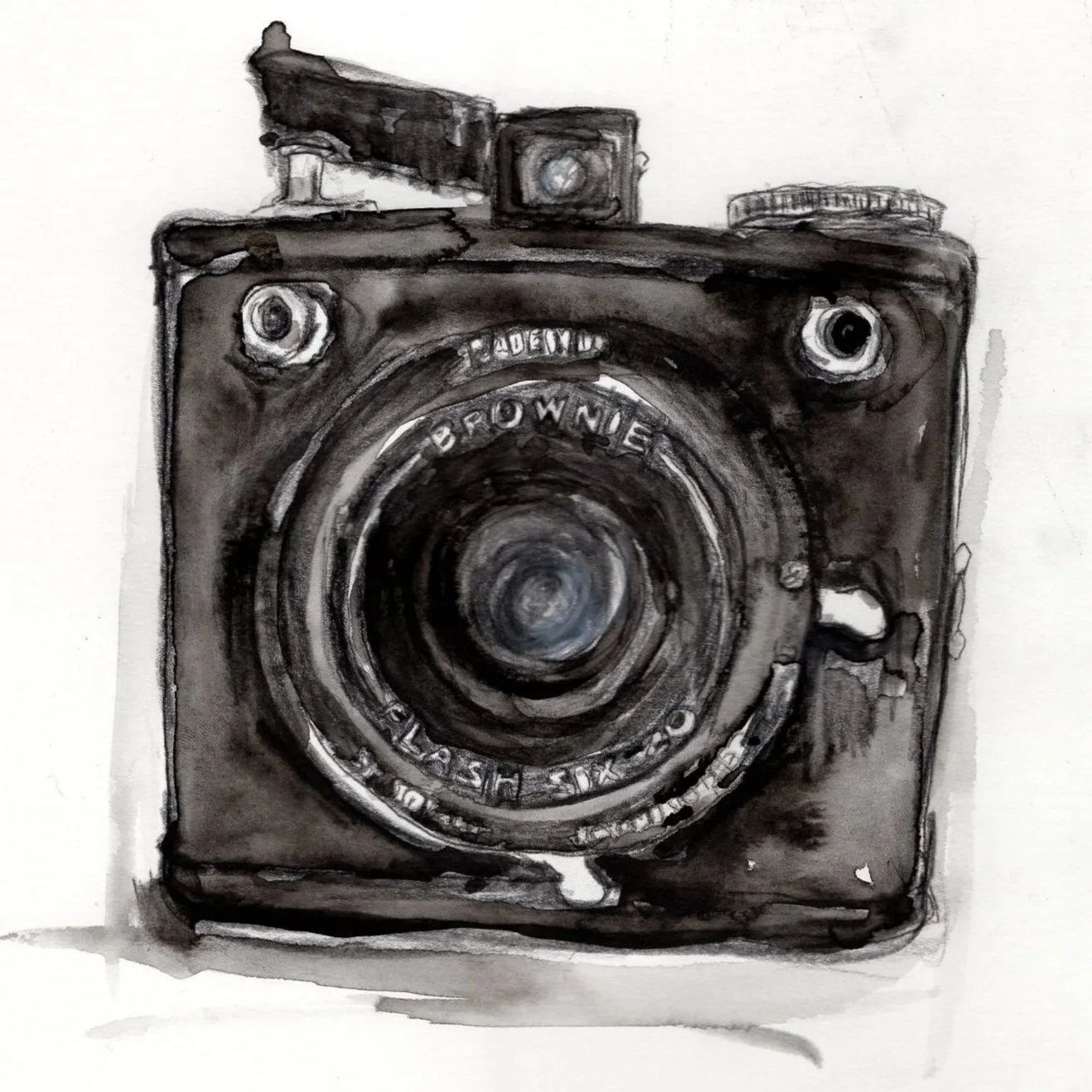
My grandpa Ben loved cameras.
My grandpa Ben, a Holocaust survivor, loved cameras.
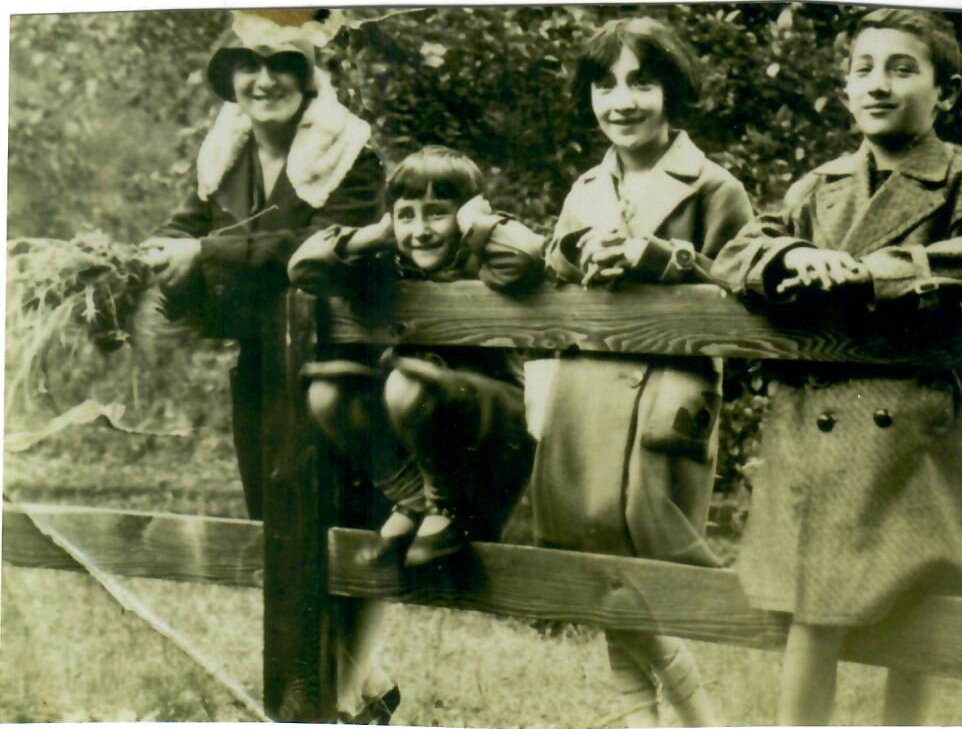
From right to left, Grandpa Ben, Great-Aunt Yanina, Great Aunt Hanka, Great-Grandma Felicia in pre-war Lwow, Poland.
Before
My grandpa was the middle child. He had two sisters, Yanina, the oldest, and little Anna. His dad, Szymon, was a famous mathematician and beloved educator. Ben had trouble living up to his father’s towering reputation and his genius older sister’s accomplishments. He was 12 when his mother fell ill and died.
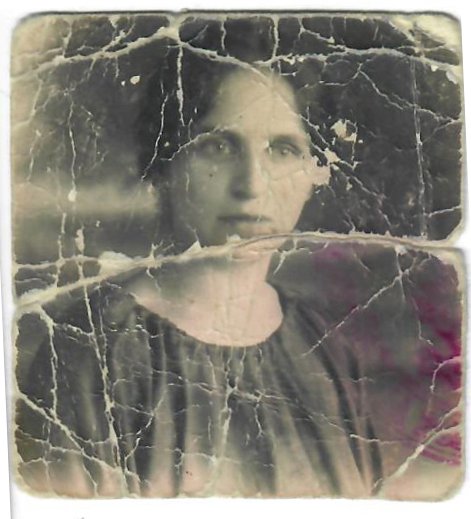
Ben carried this picture of his mother everywhere, tucked into his pocket.
Ben carried this picture of his mother everywhere, tucked into his pocket.
As a teenager, my Grandpa Ben was terribly lonely. At home, he had new twin baby brothers, but he didn’t like his new stepmother. His older sister, Yanina, had married and fled Lwów.
Outside, the world was closing in on Jewish people. It was hard to find work. The Soviet occupation meant they were often hungry, and had to beware spying neighbors.
At last, Ben found love. At age 23, he was a newlywed with a young wife.
June 30, 1941
The Lwów linden trees were at peak bloom, exploding with sweet-scented flowers, as the German forces entered the city.
What followed came fast. The Soviets fled, their secret police murdering everyone in the local prisons on the way out. The Nazis blamed the Jewish community and forced them to bury the bodies. Pogroms began immediately, encouraged by the Germans and carried out with the help of local nationalists.
Ignacy Chiger, a Lwów survivor, described what the first days were like:
“Jews were corralled in prisons where they were forced to carry out the corpses of the prisoners murdered by the Russians and to clean the cells of blood and excrement...the Jews who — after finishing their job — were murdered in the prisons they had already cleaned.”
Within days, the Nazis had murdered all of Szymon’s Polish colleagues at the University.
Ben’s young wife was taken and murdered. Then, his stepmother and twin baby brothers were taken and murdered.
In November 1941, Ben, his father Szymon, and his sister Anna were forced to abandon their home and move to the Lwów Ghetto — a cramped open-air prison, a slave labor camp, and a killing ground created in a section of the Jewish neighborhood.
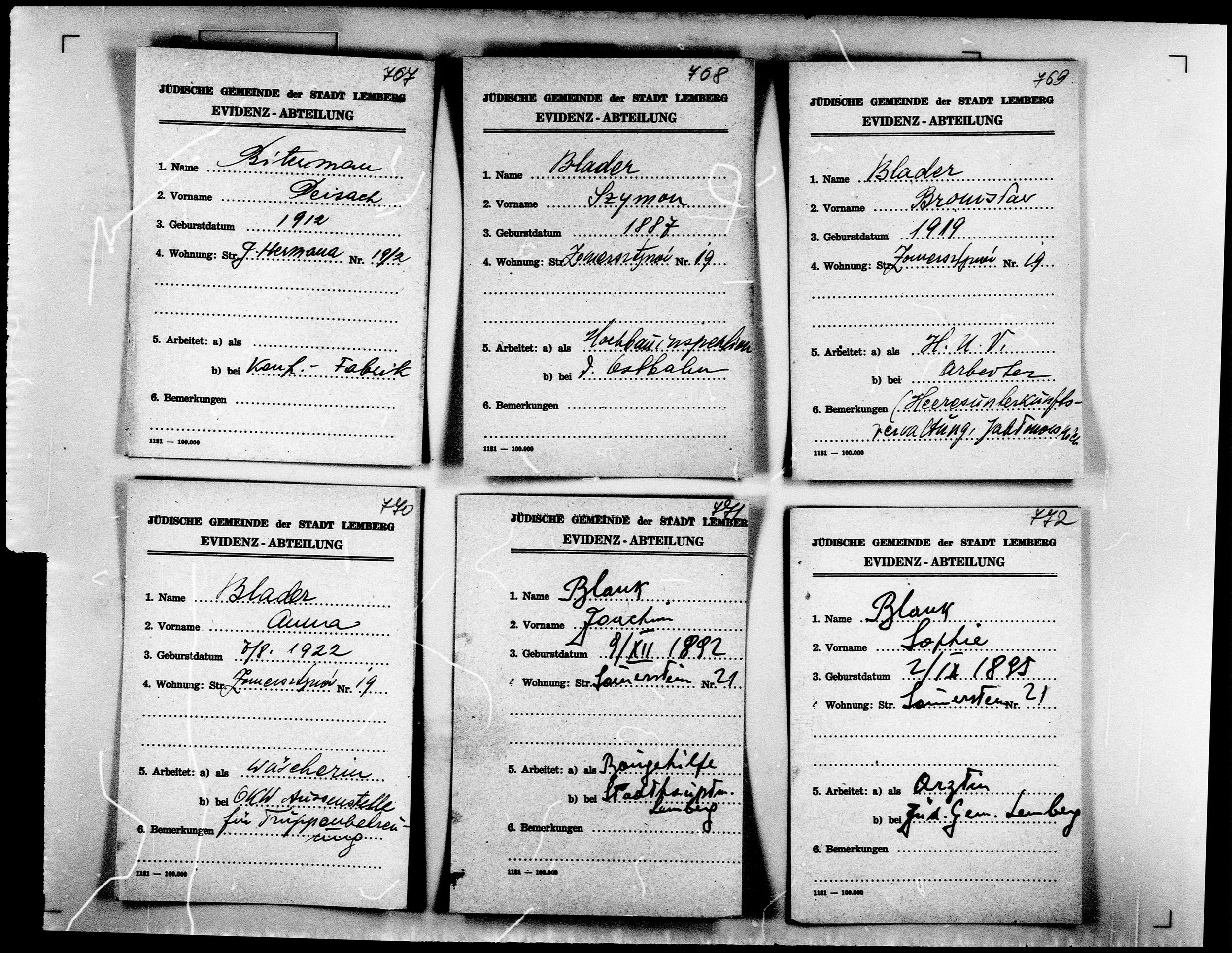
Ghetto registration cards for Szymon, Ben and Anna blader.
The Ghetto
Simon Wiesenthal, who had attended the same polytechnic school as Szymon, would survive the Lwów Ghetto and spend his life hunting Nazi war criminals. He wrote about the Ghetto:
“Each of us was carrying around his own death certificate, from which only the date was missing.”
It is perhaps impossible to describe a Nazi ghetto. Where dead bodies hung from light poles, and Nazi soldiers hunted children. Where the phrase “you’ll end in the sands” — meaning the mass execution site outside the ghetto — entered common parlance and was used, as David Kahane wrote, “by everyone in a casual fashion.”
Approximately 135,000 Jews were murdered in the Lwów Ghetto and the Janowska camp: shot, tortured, starved, or worked to death.
Ben’s father, Szymon, the mathematician, brought only a pile of papers when they entered the ghetto.
Ben observed: “When I saw he only brought papers, I knew, then, that he would not survive.”
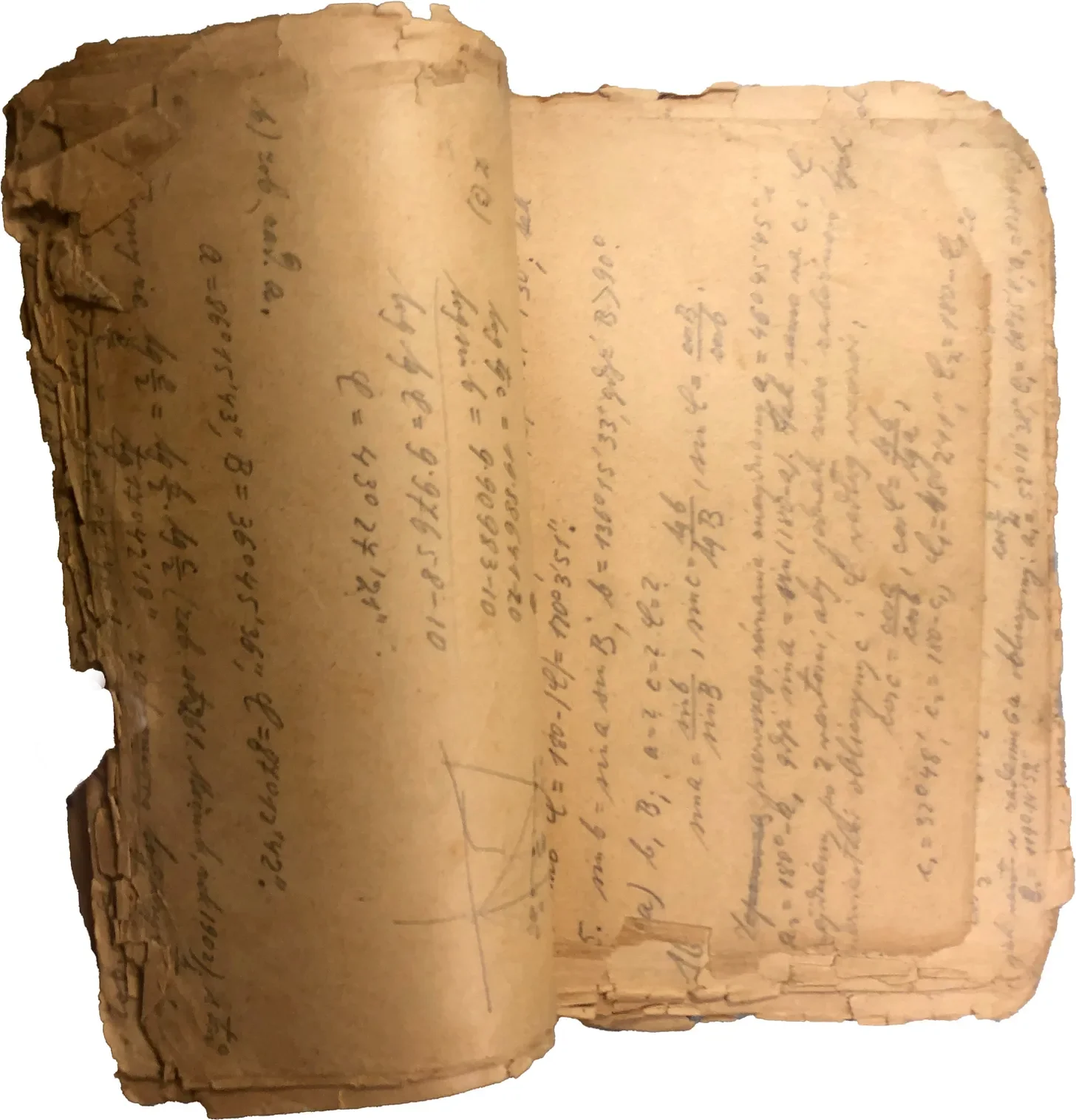
My great-grandpa’s last manuscript.
In the ghetto, in stolen moments, Szymon worked on mathematics. The companion manuscript. The final problem reads:
If G₁ and G₂ are stars, then r₁ – r₂ = ?
This is the mathematics of celestial navigation, used to pinpoint one’s location on Earth by observing the tiny lights that pierce the vast darkness.
RUN
Ben’s teenage sister, Anna, made contact with the Jewish resistance. She could pass for Aryan . She had light eyes, light hair, and spoke perfect Polish and German. They got her a job in a Nazi bar to collect intelligence. This work destroyed her mental health, but saved her brother’s life.
Ben saw their father one last time.
Szymon was in a prison uniform, cleaning a curb.
“Papa!” Ben exclaimed.
His father commanded Ben to take his sister and run.
“RUN.”
Soon after, Szymon disappeared.
Ben hid his father’s papers in a wall.
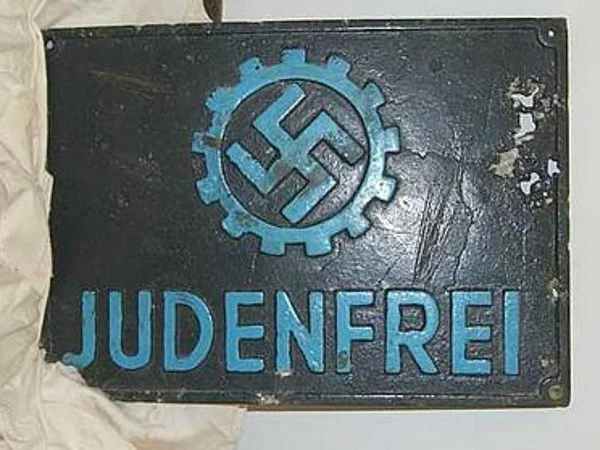
In June 1943, after the final liquidation of the Lwów Ghetto, the Nazis hung a sign: “Judenfrei.” Jew Free.
Warning: The following link contains historical film footage of extreme violence against Jewish people during the Lwów pogrom of July 1941. It was recorded by the perpetrators, seized by US forces after the war, and used as evidence at the Nuremberg trials. It is among the most disturbing documents of the Holocaust. Please take care.
Pogrom in Lwów, July 1941 — US Holocaust Memorial Museum
The Nazis controlled Jews by showing them that if they disobeyed, 10 or more innocent people would die as a result.
Ben and Anna survived because they ran. Later, Ben risked his life to retrieve his father’s papers, including his final work.
These are what I found in the box in the basement. I’m bringing them to the Yivo archive tomorrow.
* (End Note) The Holocaust was the mechanized humiliation, enslavement, and extermination of Jewish people, Romani people, Gay, Lesbian, and Transgender people, and brave souls of all backgrounds who dared to fight back - may their memory be a blessing.