Chapter 11: Any Baby that Cries, Dies.
When the war ended, my grandpa Ben and his sister Anna went to a Displaced Persons (DP) camp. He met my grandma Rita, who traveled with her sister, Frieda. (I wrote about them in Chapter 7).
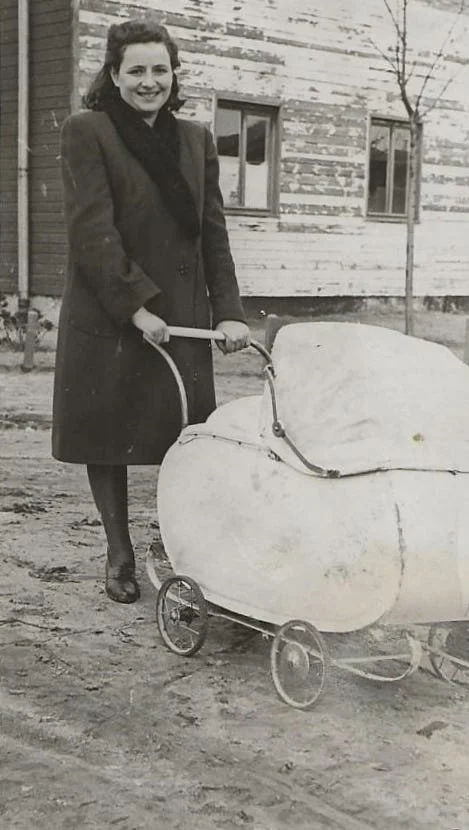
Frieda with her baby Gerardo in the refugee camp.
In the refugee camp, my grandmother’s sister, Frieda, had a tiny electric cooker but no pot.
She had a baby, Gerardo, who weighed 1,800 grams at birth (three pounds, fifteen ounces), born after the pogrom in Kielce, after escaping Siberia to Poland on freight trains with no bathrooms and a boat that ran aground on a sandbar while she held a crying infant to her breast and prayed no one heard him.
She had a room in Block 41 that she shared with her husband and two single men.
She had a sister who had survived, my grandma Rita, in the same block, in a different room.
Freida needed a pot to heat semolina for her baby.
Rita’s sister-in-law, Hanka, had a small pot.
Years later, Frieda wrote a letter to her daughter Yvonne about what those years were like. This is what she wrote:
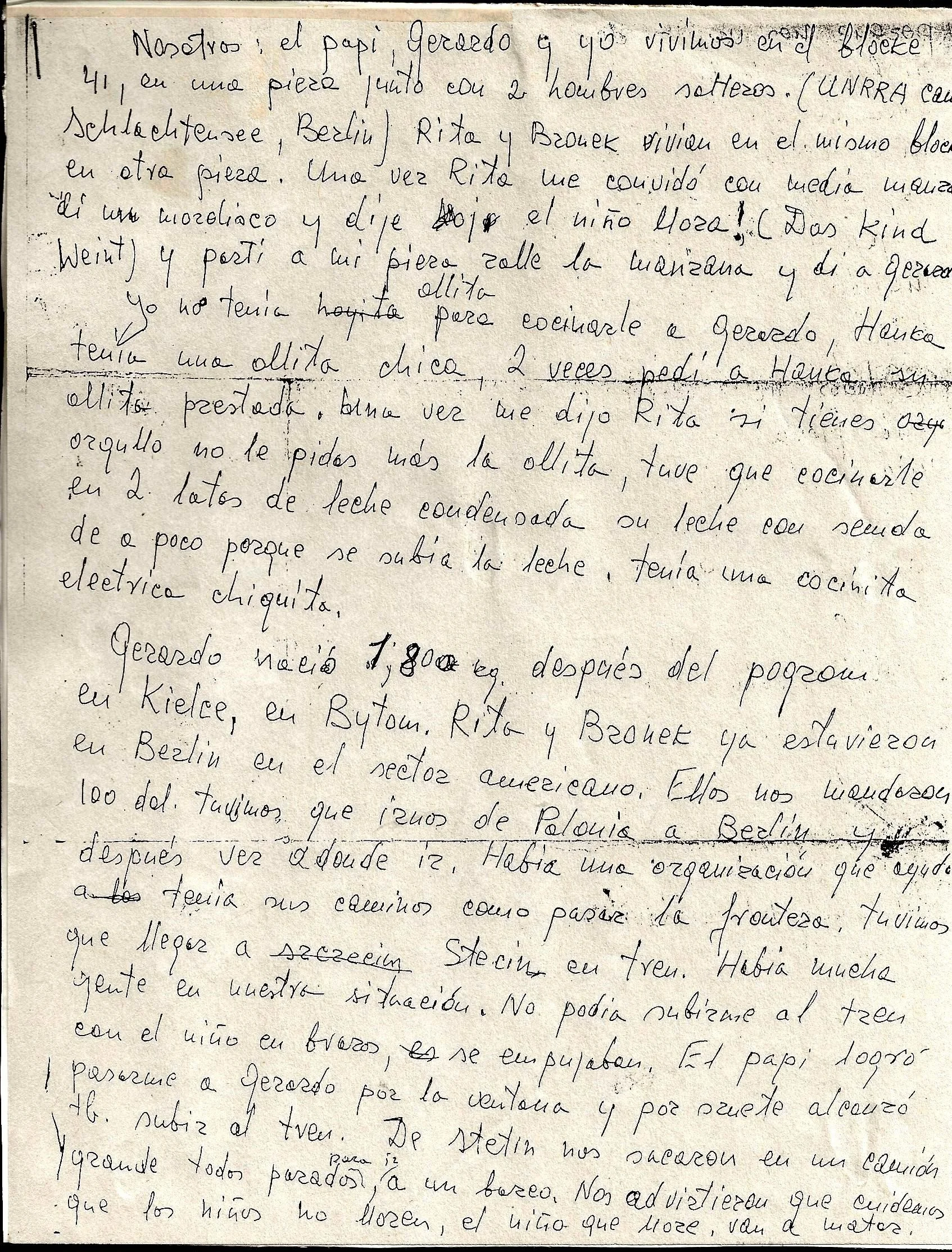
Courtesy of Yvonne Hiller
Frieda Blezowska Schwarzblatt — Letter to Yvonne
“We all — Papa, Gerardo, and I lived in Block 41, in one room together with 2 single men. (UNRRA-Camp Schlachtensee, Berlin.) Rita and Bronek lived in the same block, in a different room.
I had no little pot to cook for Gerardo. Hanka had a small pot. Twice I asked Hanka to lend me her little pot. One time, Rita said to me, ‘If you have any pride at all, don’t ask for the pot anymore.’
I had to cook for him in 2 condensed-milk tins, or cook milk with semolina very slowly because the milk would boil over. I had a tiny little electric cooker.
Gerardo was born weighing 1,800 grams, after the pogrom in Kielce.
Rita and Bronek were already in Berlin in the American sector. They sent us 100 dollars. We had to get ourselves out of Poland to Berlin and then figure out where to go from there. There was an organization that helped — it had its own routes for crossing the border. We had to reach Szczecin Stettin by train.
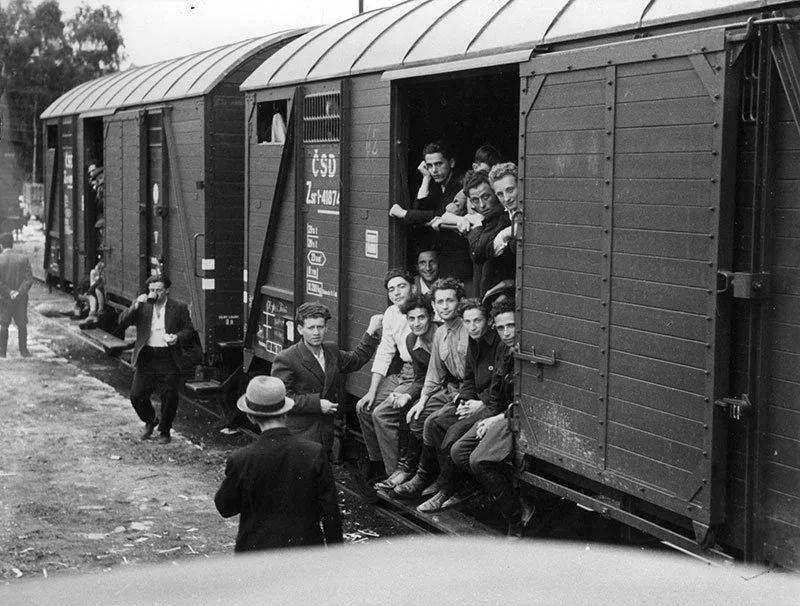
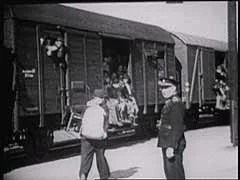
There were many people in our situation. I couldn’t get onto the train with the baby in my arms — everyone was pushing. Papa managed to pass Gerardo through the window to me, and luckily, he managed to get on the train too. From Stettin, they took us on a large truck, everyone standing, to a boat. We were warned to make sure the children don’t cry. A child who cries — dies.
…because they would discover all of us. I had my son in my arms. He was crying, fussing — I had my breast out at his mouth. The boat — we had bad luck. It got stuck in the middle of the sea on a sandbar. The maritime border police came on board and said pay up, or get off and be arrested.
I had the 100 dollars Rita had sent me hidden in a tin of baby talcum powder, and I gave it to them — I had nothing else. They took us all off anyway. They brought us to a prison — 70 people in one room — we lay down on the floor, Gerardo on top of me, I watched over him. They took us to court and gave us 4 years in prison if they caught us again — and Gerardo, 16.
[Before this], when we came out of Russia and arrived in Poland, the Poles threw stones at us.
We traveled in freight trains with no bathrooms — me in my eighth month of pregnancy, imagine. Better I don’t tell you more.”
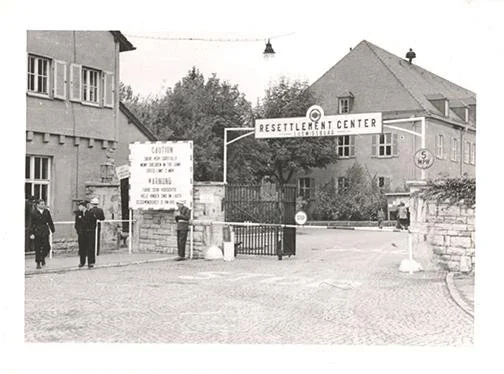
Most of the DP camps were former concentration camps. The world still smelled of death. The Jews still lived behind barbed wire, sharing quarters with antisemites. Illness and malnutrition were rampant.
Summing up the conditions faced by Jewish DPs, Earl Harrison, reporting to President Truman in 1945, wrote:
“We appear to be treating the Jews as the Nazis treated them, except that we do not exterminate them.”
The Americans created separate camps for Jewish refugees. My father was a small child in one. He remembers eating food dropped from airplanes, being terribly hungry, and consuming meat from a dead horse on the road.
Any yet, people began to create experiences for each other. Theaters, orchestras, literary magazines, newspapers, and sporting events. Aharon Appelfeld, a survivor, wrote:
“The first entertainment troupes made their appearance: a mixture of old and young people, among them former actors… and all manner of skinny people who found this distraction cathartic.”
At the UNRRA camp, Frieda’s husband got a job at the camp newspaper, translating from Hebrew and German into Yiddish. Every month, he received a package for his work.
Frieda wrote:
“It had condensed milk, coffee — I don’t remember — a chocolate — no, we never tasted a single piece of chocolate. Papa sold everything to a shop that a woman in our block ran, and bought Gerardo bananas.”