Screentime Schedule for Kids
This is the thing I’m asked about most.
Make a Weekday Schedule
The more money and free time you have, the more likely you are to shape your child’s day like that of a 19th-century aristocrat’s heir. (Happy to map that out for you for $$$$!)
For the rest of us, here’s a practical, imperfect, real-life schedule:
Morning Before School
No screens. Breakfast and spending a super long time putting on socks and shoes. No one knows why it takes so long or so many prompts. But it does.
School
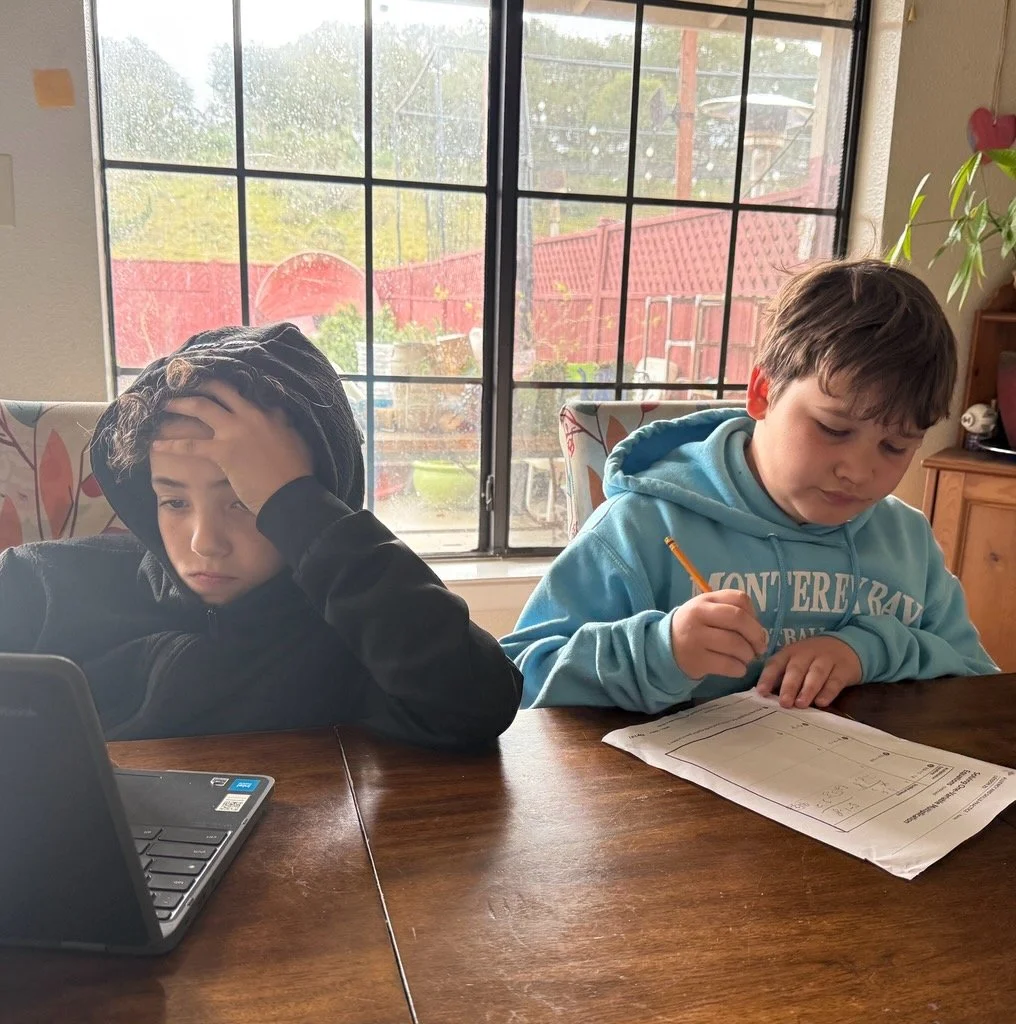
If your child attends a traditional school, please be aware that using Chromebooks has been scientifically shown to hinder many students’ learning. The areas most affected are reading and writing. (Please see my handout on Screen Inferiority Effect.)
Right After School
If you pick up right after school or sports: School can be tough. It’s like being at a cocktail party all day. Consider keeping a routine. Children—especially ages 10 and up—need to process all the hard, weird, and dumb things that happened. Bring them a snack. Let them sit in the car silently as you drive until they begin to talk.
Don’t overreact or try to convince them to feel better. Just listen and validate: “That sounds like it was hard.” “What a total jerk.” “I’m on your side.” “That lady sucks.” Etc. They will calm down and get more positive, I promise.
If you’re a working parent: If you can, enroll your younger child in an after-school program that includes unstructured outdoor play with friends. You might need to tell the program leaders (as I do, every darn year) to let your child skip homework or “additional academics”—a.k.a. stupid worksheets—and allow them to play outside the whole time. You may even want to donate soccer balls and portable goals, if you have the means. When you pick up your child, they will need to process their day. See the paragraph above.
Arriving Home
Younger kids should get a 20–60 minute allowance of screen time each day (your choice!). They can “spend” their budget as they like, but they are limited to watching streaming shows or playing games that you approve of. You can cut down the budget as a discipline tool. The kids might want to finish their homework first or relax with a screen, then work—either is fine. All screens should be in a common area of the house: the living room, the kitchen, and the dining room. No screens in bedrooms, ever.
Again, no screens in bedrooms, ever.
Note on Homework:
When possible, have kids complete screen-based homework before dinner time. Don’t make homework a battleground. It’s not worth it.
I’ll create a separate document about de-escalating the homework war.
House Rules
Internet
All internet use must be at the kitchen table. No internet in bedrooms.
Phones
No smartphones until age 16. Middle school can be a good time for wristwatch telephones (you know what I mean). No phones—including watches—go in bedrooms, ever. Phones stay on the kitchen counter overnight.
Social Media
No social media for children. I’d rather they smoked cigarettes.
AI
No AI until age 20.
See other related resources for my argument on this, or reach out to me.
Dinner
Dinner signals the end of screen time for the day. All screen-based homework should be finished by dinner, or abandoned. Phones—including adults’ phones—are placed on the kitchen counter, away from the table. All family members eat together. Once a week or so, have a movie night and watch something together as a family.
After Dinner
This will bother your kids. OMG. They may fall boneless to the floor. Ignore and proceed as if they are so excited.
Consider these options:
Family reading time. Everyone reads books or plays analog musical instruments nearby/with each other to wind down the night. (This is my favorite.)
Family walk. Go outside and walk together. It may be helpful for whichever parent works longer hours to do this with the kids, giving the primary caretaker a break. Parents should plan to be quiet and let the kids talk about whatever they want. This is a time to listen. Let them bring flashlights when it’s very dark. (This is my husband’s favorite)
Creative time. Kids can finish homework that doesn’t require screens, or work on a creative project, board game or puzzle. (This is my best friend’s husband’s favorite and her least f-ing favorite.)
A note for families with neurodivergent kids: Consider allowing the home to darken without electric lights when possible. Let their nervous systems wind down at the speed of sunset. (More strategies soon, please contact me for/with ideas in the meantime. I’m learning on this autism-mom job.)
Evening Prep
This is a good time to work together to pack lunch and backpacks for tomorrow. The less complicated you make mornings, the better.
See my handout on reducing decision fatigue to survive ages 0-14.
Bedtime
Pick a time that works for your family and make a list of what should happen. For younger children, make the list something you can check off or put stars on. Reward the stars. Get granular, so you don’t have to tell the kid to do stuff. Just point to the chart.
A sample:
Pick out clothes for tomorrow
Brush teeth (break this down into steps for younger kids)
Bath or shower
Put on pajamas
Hair: brushing, braiding, picking, or wrapping, etc. (note: so complex for my family!)
Aromatic oil or pillow spray (smells to signal sleep)
Turn on the nightlight
Special talking time (ask if there’s anything else they need to tell you. The tender things often come out here)
Story, and/or song.
Tuck in with kind words. (The stuff of lovely memories)
Go have a drink and a cookie. You earned it.