AI and The History of Extractive Industries in Rural Communities
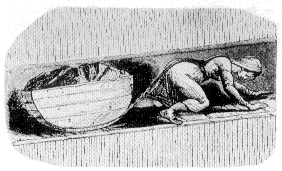
A young child worker assigned to access a narrow mineshaft.
Putting people’s frustration in historical context helps us understand each other.
As rural communities across the country consider hosting AI data centers, our first priority must be our children.
We have an erratic track record of protecting childhood in the English-speaking world. Until fairly recently, children were employed in the factories and mines of the Industrial Revolution.
By 1788, two-thirds of the workers in English and Scottish cotton mills were children.

A ticket to a Luddite meeting.
The term “luddite” in today’s parlance suggests someone who avoids technology. Its origin is with an uprising of rural English weavers - artisans whose lives revolved around their craft. Industrial textile factories were able to produce fabrics more cheaply and quickly.
The Luddites, those maligned weavers, were lovely parents. Their children lived in small communities, spent lots of time outside with their families, and learned the family cottage industry as their ancestors had for centuries.
In 1810, the Luddites weren't fighting because they hated technology. They fought because they loved their culture. They didn't want to move to cities and be separated from their children, who would also work long hours, in noisy darkness, malnourished, and in danger.
The Luddites lost.
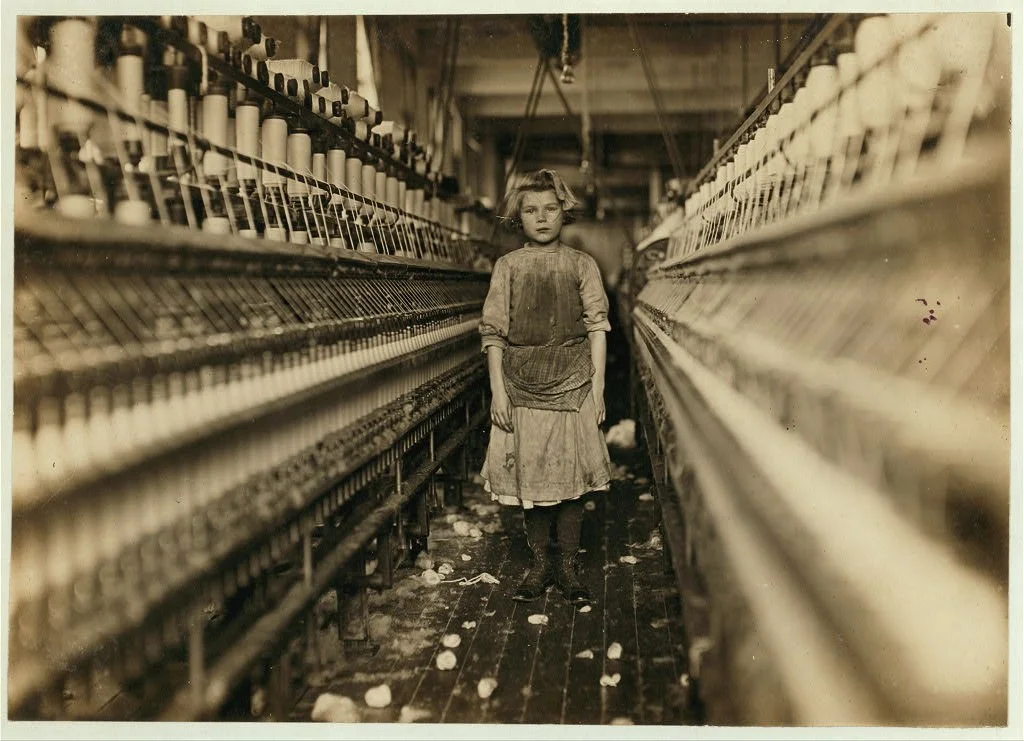
There were no protections for these kids until 1856, when a child labor law made it legal for children ages nine and up to work 60 hours per week. Their childhoods were interrupted. No one protected them.
Meanwhile, the technology that enriched the robber barons in London destroyed the traditions of the rural villages. And their children were illiterate.
Extractive Industry in Rural Communities:

My hometown’s 400-foot-deep pit mine
A Timeline:
In rural America, there is a similar history of technology and dislocation. Communities like my pit mining hometown on the Delaware River experienced from the late 19th and through the 20th centuries as a time when local resources were extracted for national and global benefit, leaving behind biological, economic, and political damage:
As rural communities lost their economies, they also lost infrastructure. Medical centers, childcare providers, and community programming became scarce. Church membership, social clubs, and intramural sports dwindled. Kids didn’t want to stick around after high school. Commutes to work grew longer. We all grew further apart.

Now come the AI data centers.
The data center is the post-industrial factory. It doesn't need to hire townspeople. It just needs their land, their water, lots of electricity, and to harvest the digital output of their family’s lives.
Hardware manufacturers (Nvidia, Broadcom) and hyperscale cloud providers (Amazon, Google, Microsoft) will generate massive wealth from data centers. By hosting them, rural communities risk further air pollution, water scarcity, rising electricity prices, a deteriorating sense of place, and limited employment opportunities for current residents.
Most frightening of all are the threats these industries pose to the sacrosanct time and hallowed ground of childhood.
The mining is performed on a child clicking a screen. The industry extracts their attention and behavioral data. Schools and universities have opened their doors, offering companies the opportunity to create young, dependent users.
Enticing children like a chatty cartoon camel offering a candy cigarette.
In 2025, rural communities are once again being engaged to advance national progress with the promise of prosperity.
When we examine the pattern of the past, it makes sense that people are sceptical.
We have the power and responsibility to raise questions and advocate for our community to receive benefits that support children and their families. Working together to develop a strategic plan to protect the sacrosanct time of childhood and our town's hallowed ground.
Coming next: A step-by-step process. (Please note: frame breaking is not an option!)
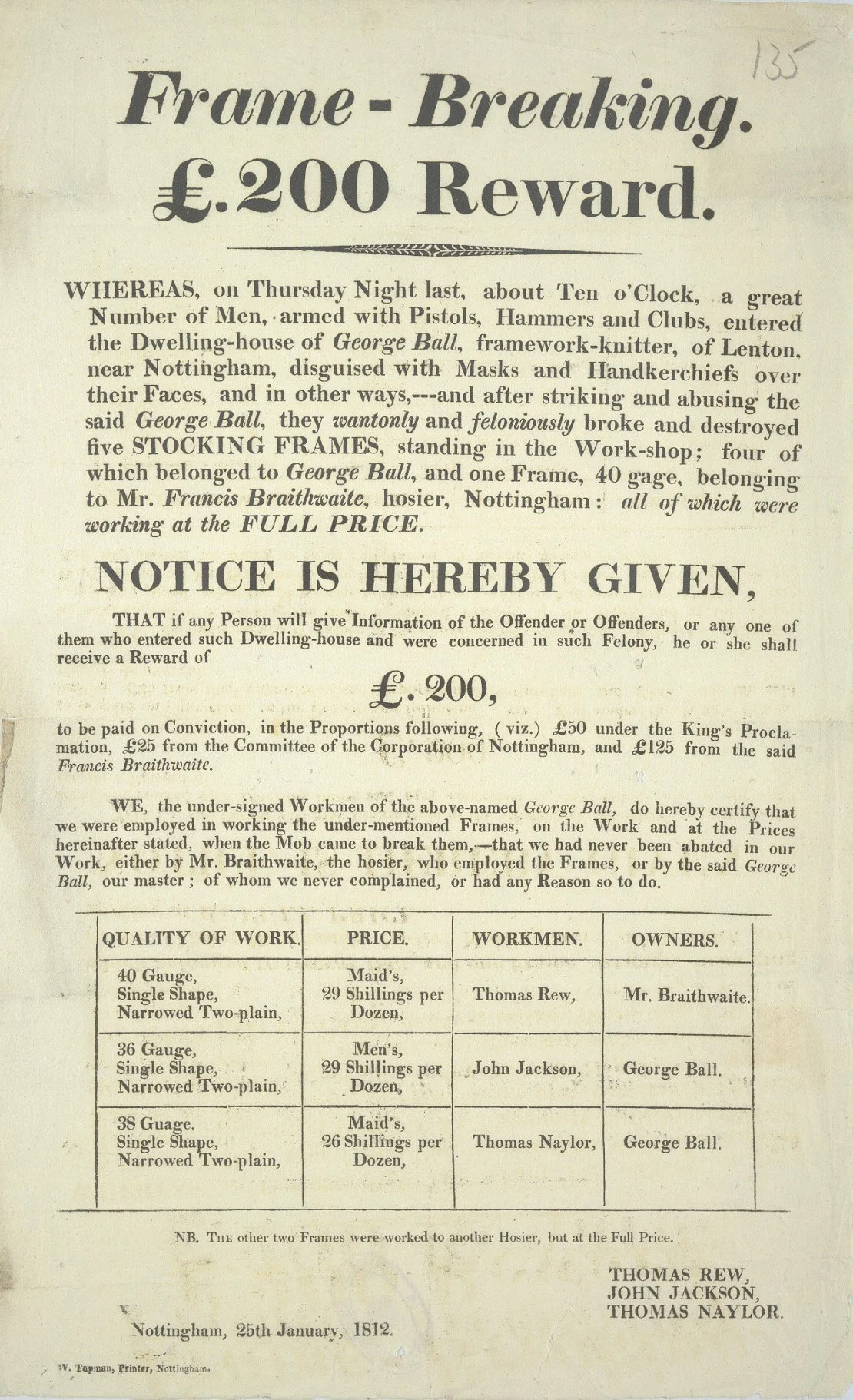
From the British National Archives. Violence usually backfires.