Chapter 13: What happened to Marta?
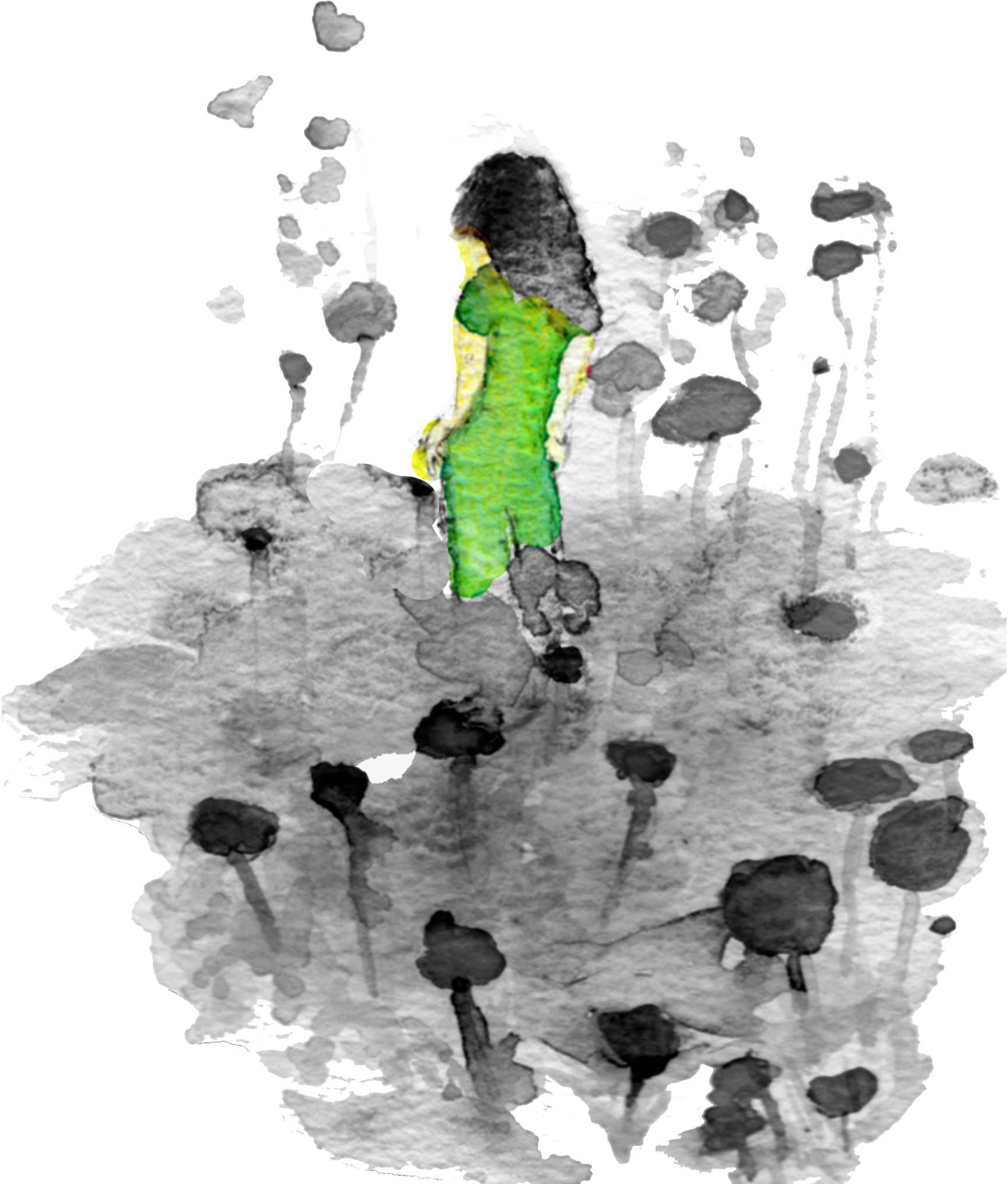
My great uncle Konrad and great aunt Yanina are buried together in the Powązki Military Cemetery. That cemetery is called Poland's "valley of the kings," because soldiers — particularly those who died in the Warsaw Uprising — as well as famous poets, political leaders, and other important cultural figures are buried there.
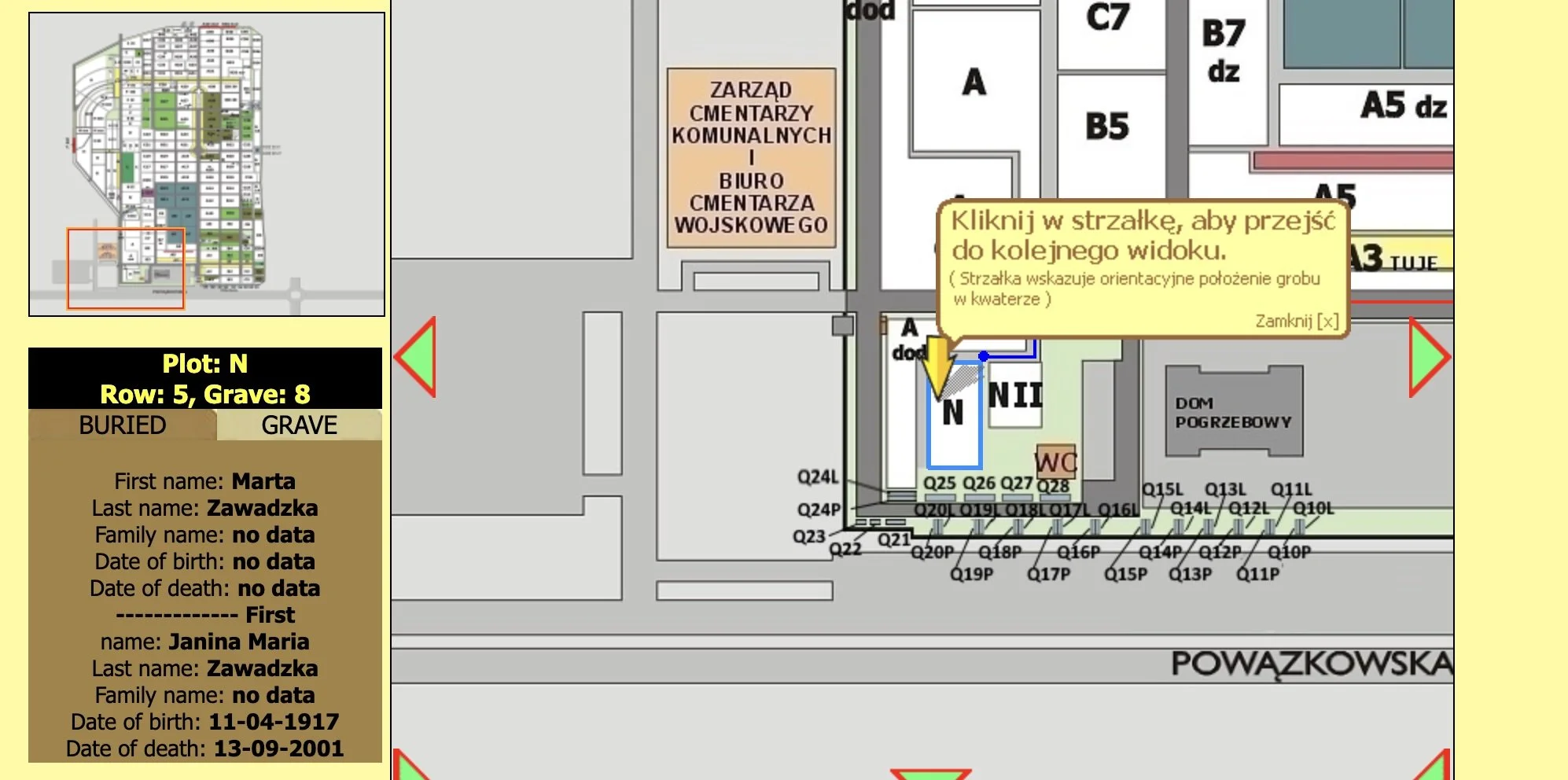
Yanina and Konrad rest in Plot N, Row 5, Grave 8. Yanina is under her Polish name, Janina (1917–2001), with her beloved husband Konrad (1912–2002).
Between them is a small black marker with white lettering that says only: Marta.
As I wrote in the previous chapter, my great aunt was born in Lwów Poland as Yanina Blader. Most of her family and friends — likely almost everyone she knew — were murdered by the Nazis. She was Jewish but hid her true identity all her life.
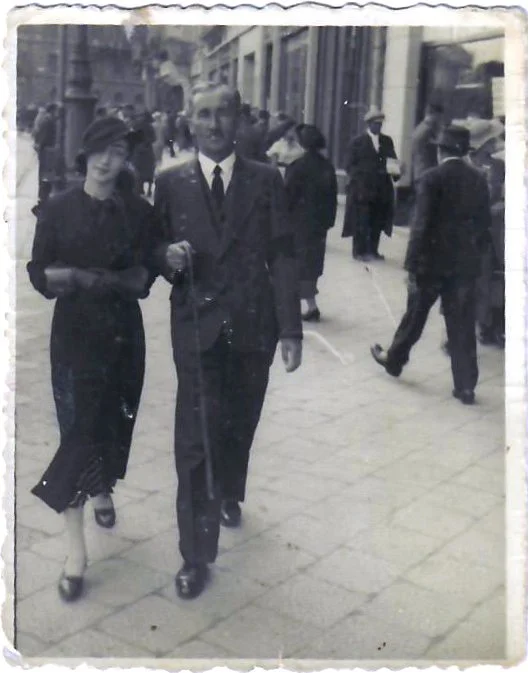
Yanina walking in L’vov with her father, Szymon Blader, who was murdered by the Nazis because he was Jewish.
Yanina loved the Polish language. She married her Polish professor Marian de Loges (I'm not a fan) at gymnasium, and received a degree in Polish philology. The marriage and her flawless language skills saved her life during the war.
In 1945, her hometown, Lwów ceased to exist as a Polish city. It became Soviet Lviv, and the Soviet Union was still deporting Jews and other ethnic minorities to Siberia and Central Asia to die in labor camps. 5.5 million people were forcibly deported. The entire populations of some areas were swapped out by the Soviets to maintain the government's control.
Not that Yanina would have had much to return to.
After fleeing her marriage with de Loges, Yanina went to Warsaw.
Czesław Miłosz, in his extraordinary book about the seductions of Communist ideology, The Captive Mind (thank you, Nika!), describes the city:
"…I returned to Warsaw and wandered together over the mounds of rubble that had once been streets. We spent several hours in a once-familiar part of the city. Now we could not recognize it. We scaled a slope of red bricks and entered upon a fantastic moon-world. There was total silence. As we worked our way downward, balancing to keep from falling, ever new scenes of waste and destruction loomed before us."
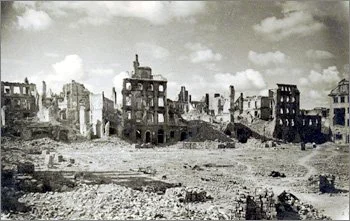
Warsaw, 1945
He continues:
"Further on, we came upon a worn footpath. It led into a deep mountain cleft. At the bottom stood a clumsy, huddled cross with a helmet on it. At the foot of the cross were freshly planted flowers. Somebody's son lay here. A mother had found her way to him and worn the path through her daily visits.
Theatrical thunder suddenly broke the silence. It was the wind rattling the metal sheets hanging from a clifflike wall. We scrambled out of the heap of debris into a practically untouched courtyard. Rusting machines stood among the high weeds…."
This is the Warsaw Yanina and Konrad found each other in. Konrad started at Polish Radio on March 9, 1945, just a few weeks before Miłosz's walk.
Yanina became Janina.
In this wasteland, she built a professional life.
Gomulicki wrote in the memorial biography:
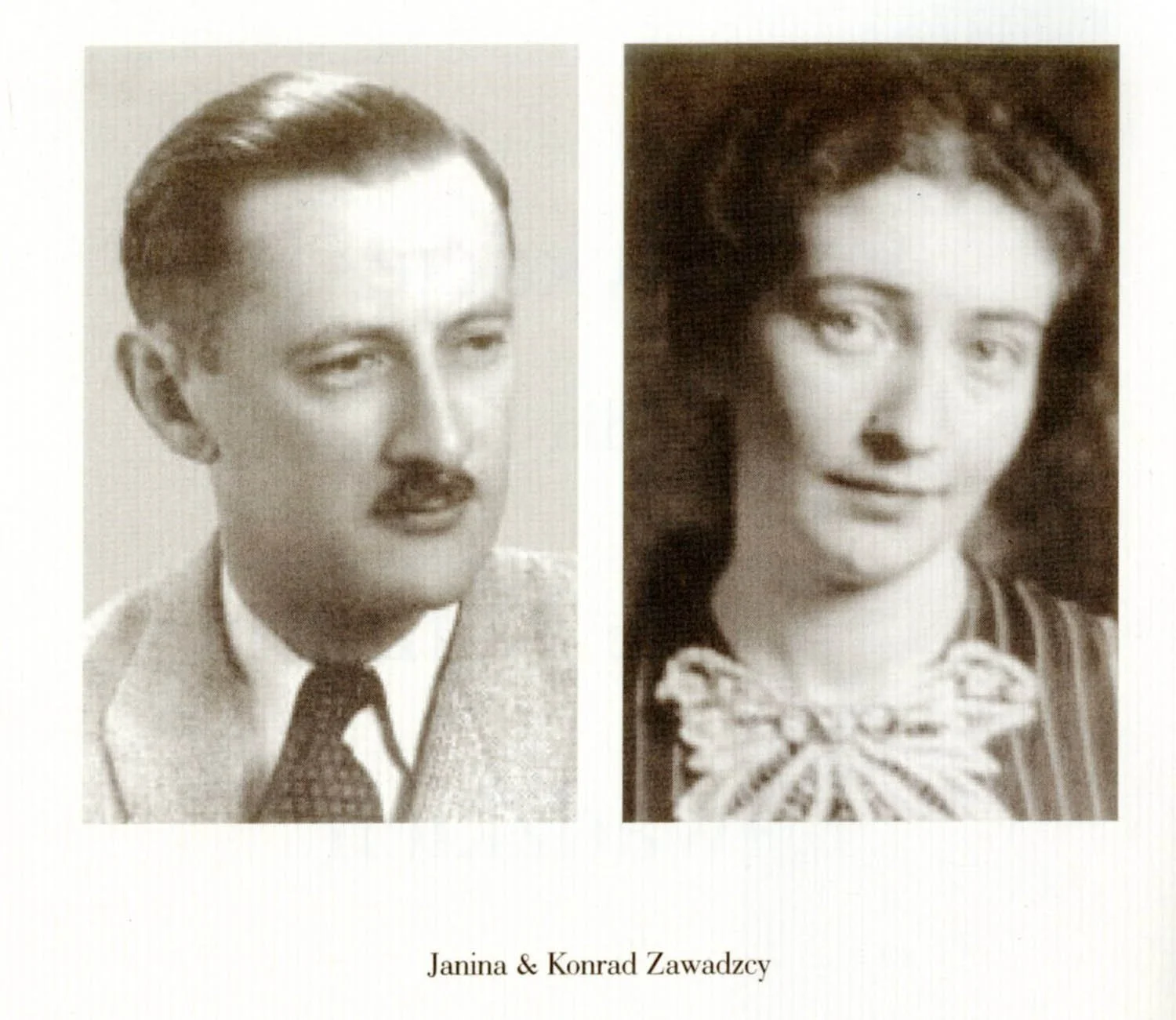
"When they both found themselves in Warsaw in 1945, each of them became connected with Polish Radio (Janina was even for a considerable time the chief editor of the weekly "Radio i Świat"). Very attractive (just as Zawadzki was), she accompanied her husband on all his trips, not only on vacations. I rarely saw her in person (Maria Kuncewiczowa, "Pani Kazimierza," called her "a sweet, blue-eyed and dark Irishwoman"), but we conducted frequent, long, and engaging telephone conversations. Konrad, who loved her deeply and was constantly concerned about her health and moods, made it his business, even when away from home, to find out how she was feeling. Many times, too, when he was at my place, he would end every conversation with the identical question: "Can I call Janka?" — which after a few years transformed into my own closing words: "Now go call Pani Janka.""
As I mentioned in the last chapter, the U.S. State Department was watching Yanina/Janka. To the Americans, she was a Communist bloc media figure.
But, the secret police of the People's Republic of Poland was also watching. A Military District Prosecutor opened a file on Janina in 1945, the year she arrived in Warsaw.
As I wrote in the last chapter, Konrad dedicated his entire career to preserving the record of Polish intellectual life. This was dangerous work.
Poland, at the time, was a Soviet satellite state actively rewriting history and controlling what could be published. Systematically preserving the actual record of Polish intellectual life was a form of resistance.
Janina worked with the living language — editor, translator, philologist. Konrad preserved its record. This is likely why they stayed. The materials were in Warsaw, in the National Library, in collections that would be lost without someone inside the institution protecting them.
In The Captive Mind (1953), Miłosz describes how much he wanted to stay in Poland because he was a poet who wrote in Polish to be read in Polish. Yet, when given the opportunity, he defected in 1951.
That same year Konrad was dismissed from his position.
1948–1953 was the period of "High Stalinism" in Poland. The secret police grew to ~32,000 agents by 1953. People were removed from positions for having connections to the Polish Government in exile, the Home Army, and the prewar intelligentsia.
There is little information about what Konrad did during the war. Lewandowska writes only, "During the occupation, he worked as a laborer. He did not leave Warsaw until 1944, after the fall of the Uprising."
Miłosz describes the Warsaw Uprising against the Nazis:
"For two months, a kilometer-high column of smoke and flames stood over Warsaw. Two hundred thousand people died in the street fighting. Those neighborhoods which were not leveled by bombs or by the fire of heavy artillery were burned down by SS squads…
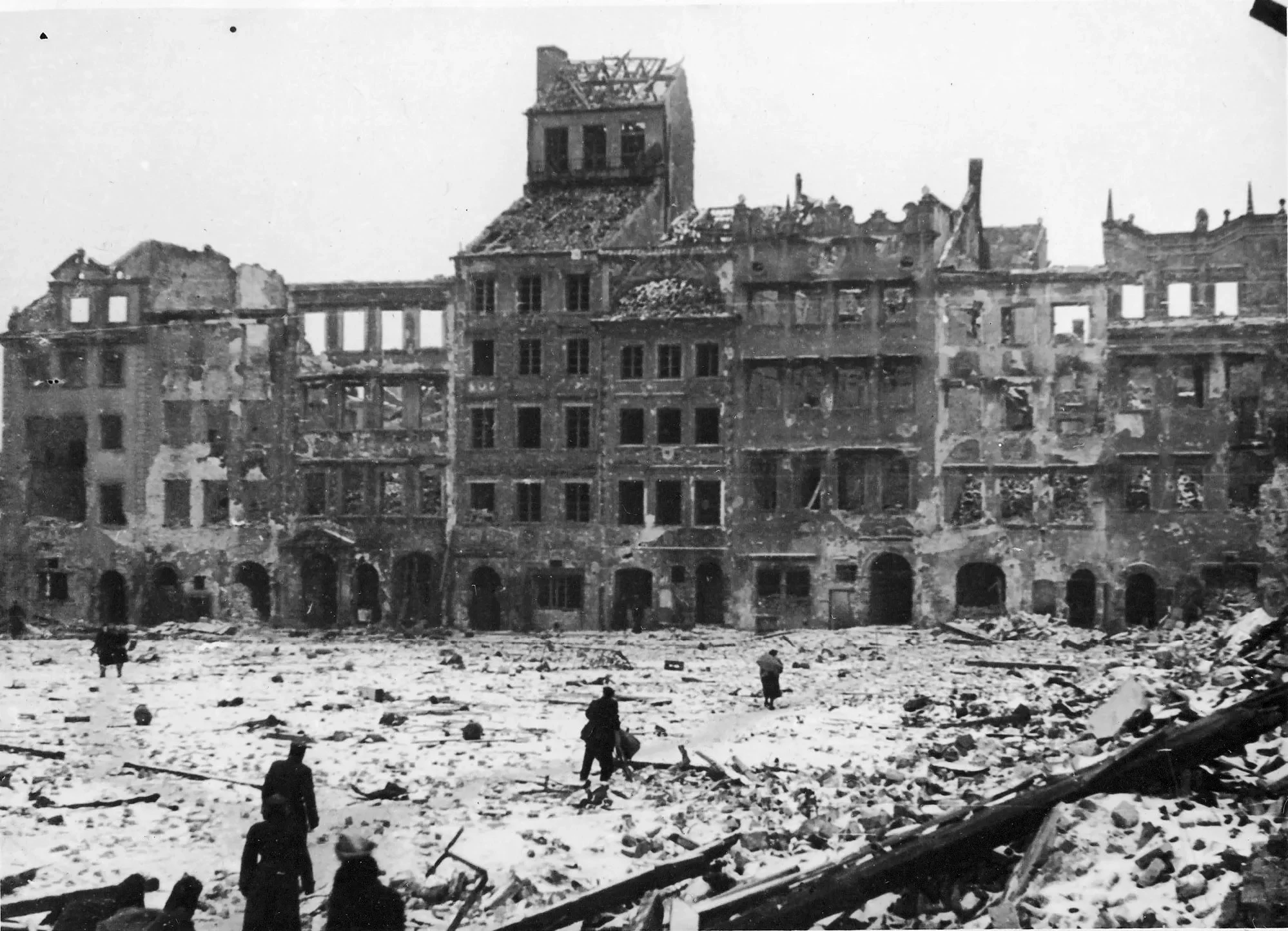
Old town Warsaw in 1944..
Once the battle in the city began, and once it became obvious that the Red Army, standing on the other side of the river, would not move to the aid of the insurgents, it was too late for prudence. The tragedy played itself out according to all the immutable rules. This was the revolt of a fly against two giants. One giant waited beyond the river for the other to kill the fly…. In the end, [the first giant] crushed the fly only to be crushed in his turn by the second, patient giant."

Soviet soldiers entered Warsaw after allowing the Nazis to murder 200,000 Polish men, women and children, sending many survivors to concentration camps.
200,000 Polish people were murdered in the streets during that uprising.
From 1948–1953 the new government wanted these insurgents of the past neutralized.
On May 30, 1951, Konrad was dismissed from Polish Radio. He'd been secretary general since 1945. After his dismissal, he worked for seven years in minor posts. The Communist Party strategy was to keep them inside the system, in diminished roles, where they could be watched.
Marta
My father, Steven, has a memory: his parents came to his room together and told him that his first cousin, a little girl in Warsaw, had been murdered by the Communist Party. They said this was because of something her mother, Yanina, wrote that they didn't like. Her parents found her murdered in their home.
When asked in the 1990s, my grandpa Ben, Yanina's brother, who survived the Holocaust, confirmed this.
The daughter never appears by name in any of the volumes. She is alluded to by Gomulicki in his 2001 essay on Konrad and Janka/Yanina's love:
"It began romantically, and that romantic note — particularly strengthened [after the premature death of their little daughter of a few years] by the shared suffering of both spouses — lasted until the very last days. I would even say that it endures unceasingly, although now in only one heart."
I never saw her name until I looked up my great-aunt and great-uncle's gravesites for this series.
Marta was my father's first cousin. She was a little girl.
I have requested files from the Institute of National Remembrance in Poland. Can anyone help me find this file?
Field Content IPN reference number IPN BU 831/2791 Former reference number 314/55/2952 Historical reference number Pr. 2707/45 Title Akta w sprawie dot. Janina Zawadzka Document creator Wojskowa Prokuratura Okręgowa nr VII w Lublinie 1945–1949 Series Akta spraw prokuratorskich Starting date 1945 Closing date 1945 Posteriora 1955 Volumes 1 Archive location Archiwum Instytutu Pamięci Narodowej w Warszawie
I want to know what happened to Marta.