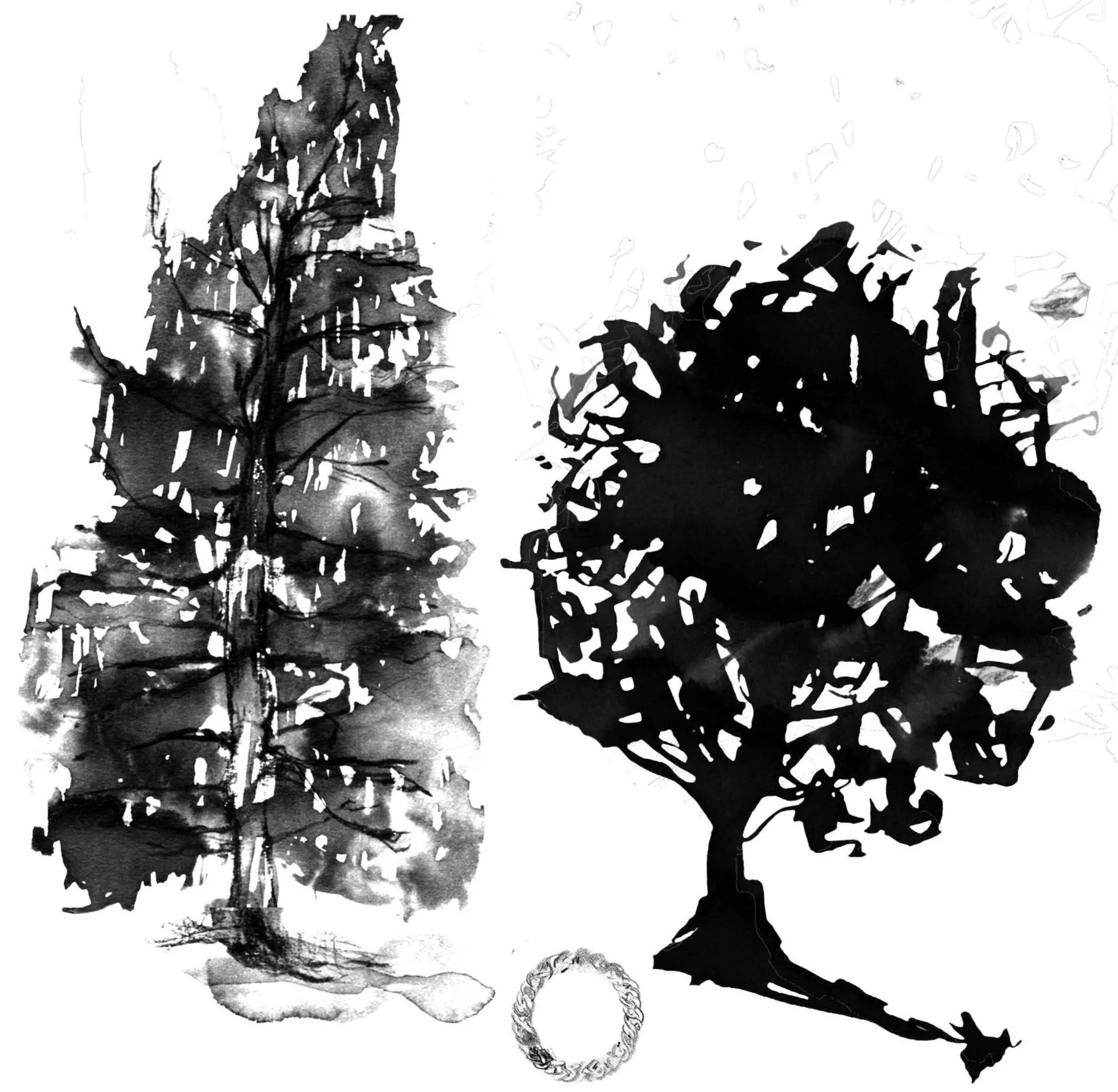
Chapter 12: Pine and Pear
Yanina becomes Janina, hiding in plain sight.
I began to search for what happened to my Grandpa’s older sister, the one who eluded the Nazis. I didn’t expect to find my first clue in newly declassified American archives.
In 1960, the United States Department of State published Biographic Directory No. 274: Directory of Polish Officials. It cataloged personnel in the political parties, government, and mass organizations of the Polish People’s Republic.
This was during the Cold War. The Americans were watching because Poland was a communist country, a Soviet satellite state on the other side of the Iron Curtain.
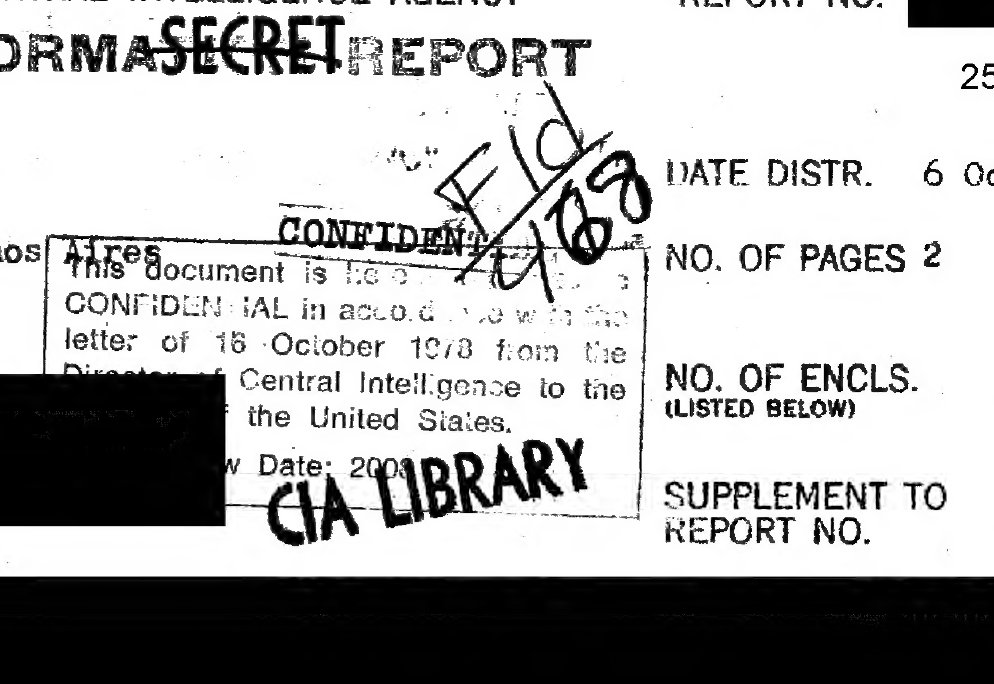
Inside, under the Committee for Radio and Television Affairs, it listed:
ZAWADZKA, Janina. Chief Editor.

She ran the weekly publication Radio i Telewizja: Poland’s main radio and television listings magazine. To the State Department, she was a Communist bloc media figure. They gave her two separate entries alongside Party functionaries.
Janina (Yanina was her name in Yiddish) was my great-aunt and my grandpa’s big sister.
A published biography of my great-aunt, Janina…
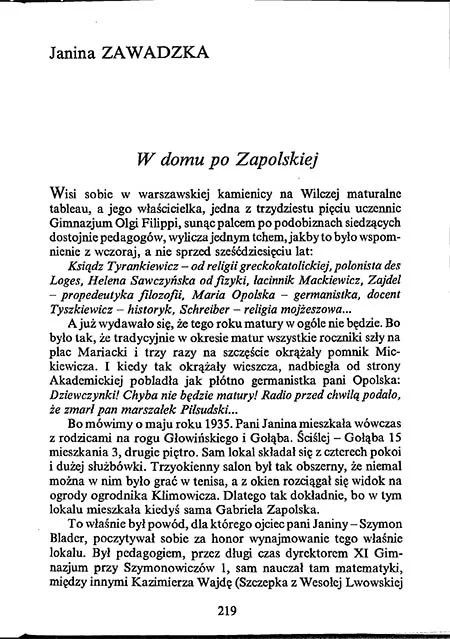
…appears on page 219 of Alfabet Lwowski — the Lwów Alphabet — by Jerzy Janicki.
Janicki's book is the third volume of a trilogy of portraits of the Lwów diaspora: people born in Lwów who ended up in Warsaw after the war. His chapter is titled "Janina ZAWADZKA." The subtitle: W domu po Zapolskiej — "At Home After Zapolska."
It opens:
"In a Warsaw apartment on Wilcza Street, a graduation tableau hangs on the wall. Its owner — one of thirty-five pupils of the Olga Filippi Gymnasium — runs her finger over the likenesses of the teachers and recites their names in a single breath, as if from yesterday, not from sixty years before:
'Father Tyrankiewicz — Greek Catholic religion, the Polish-language teacher des Loges, Helena Sawczyńska for physics, court clerk Mackiewicz, Zajdel — introduction to philosophy, Maria Opolska — our German teacher, docent Tyszkiewicz — the historian, Schreiber…'"
When I read this passage, I was in my office. I stood up so fast that I knocked over my coffee, bolted out of the building, and raced home to look through the mysterious box my mother had hidden in the basement. I remembered seeing a photo like the one described in this text…
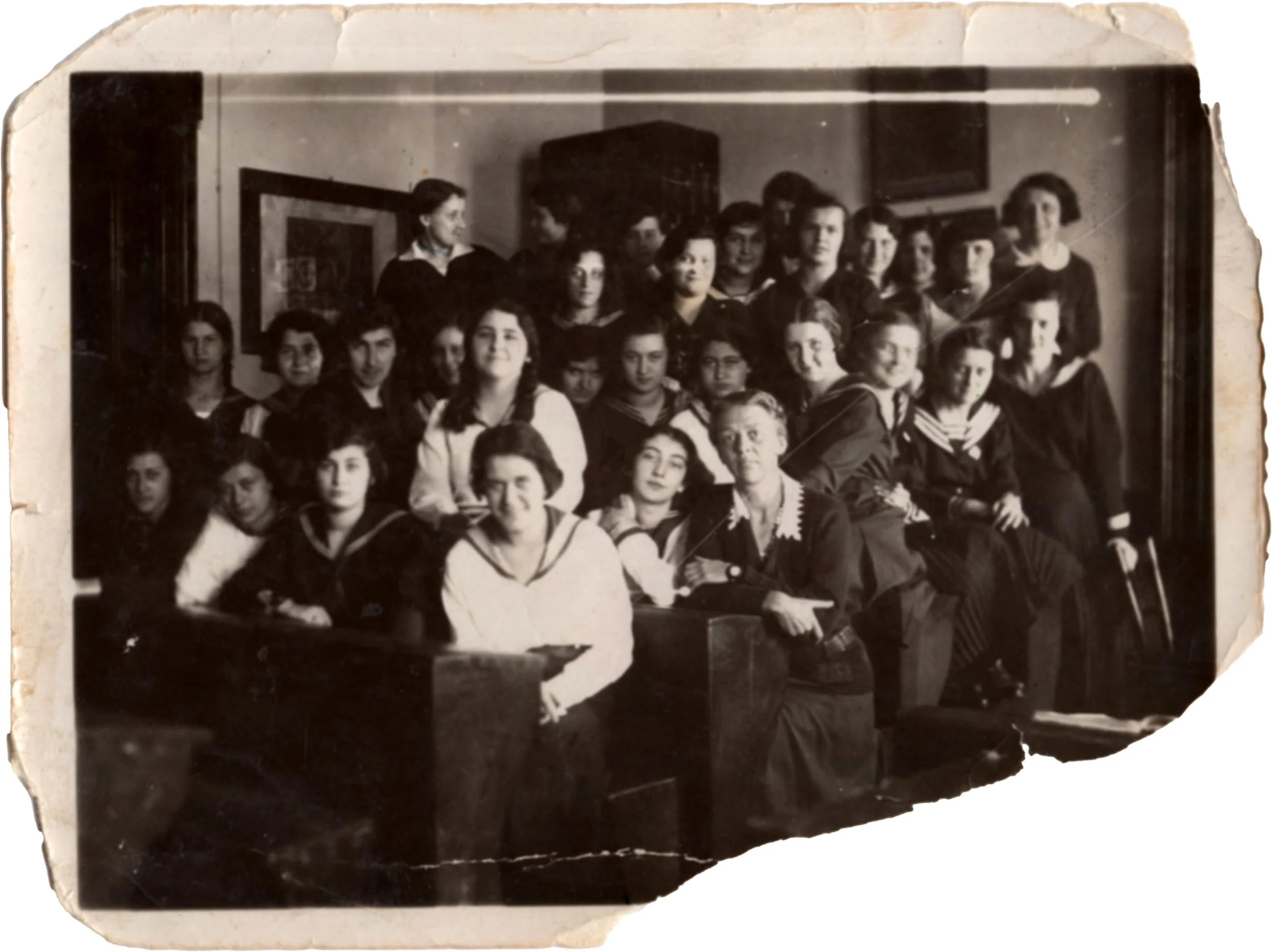
Sure enough, I had it. This was Yanina's senior photo. I turned it over to find the handwritten dedications her friends had written to "dear Yanini." It was the original.
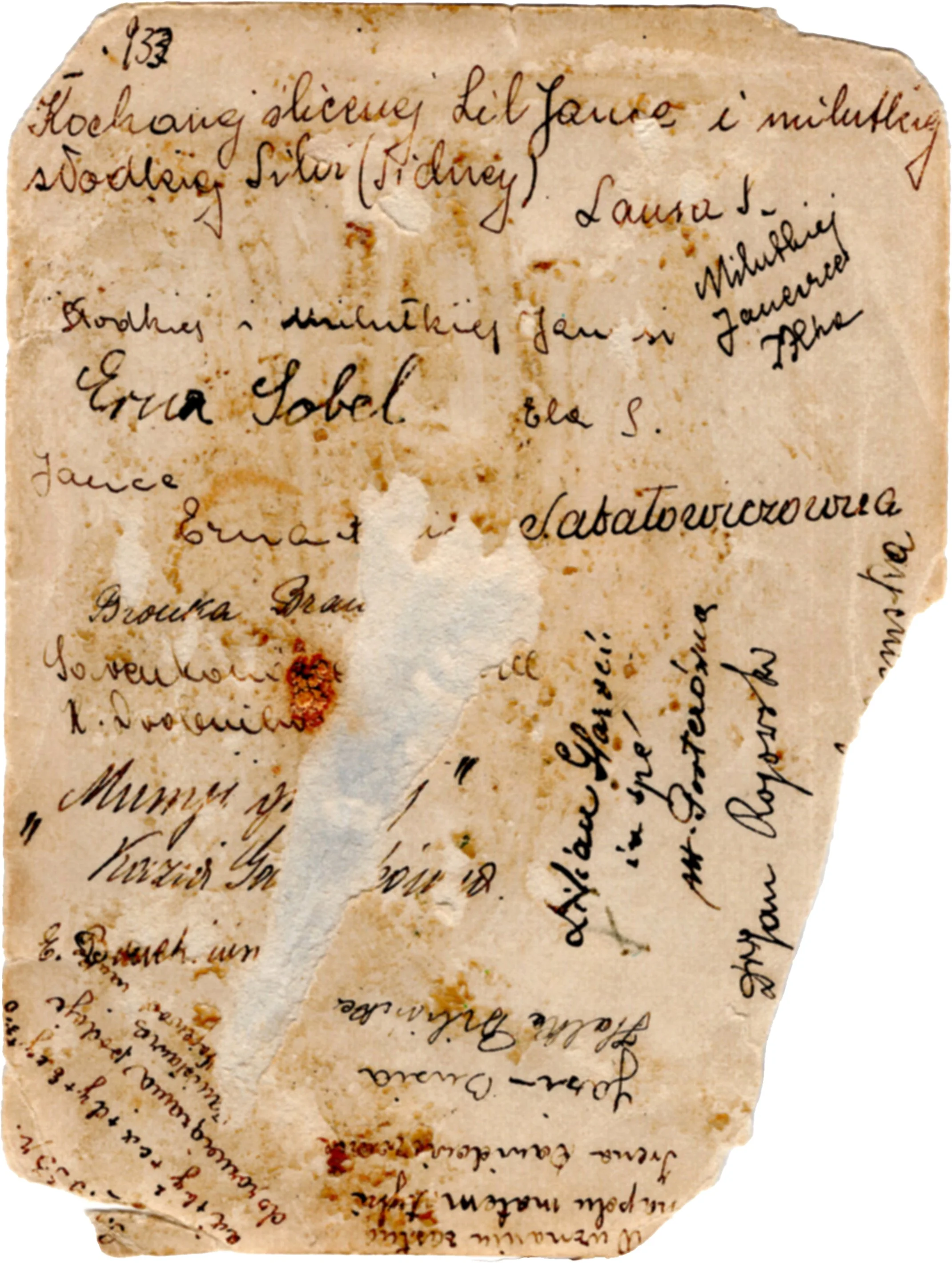
How was it in my hands, in California, ninety years later?
In his biography of Janina, Janicki mentions her father.
Szymon Blader. Educator and former Headmaster of the XI Gymnasium at Szymonowiczów 1, and a mathematics professor.
He doesn’t mention that Szymon was Jewish and murdered by the Nazis.
This is my Great-Grandpa Szymon, whom I wrote about in an earlier chapter: the mathematician who authored a five-volume textbook series used in schools across Poland, published a research paper that appears in the Einstein Papers, and won a Polish national medal for his service to education.
My Great-Grandpa’s final manuscript was scribbled on scraps of paper in a death camp, hidden in a wall by his son, carried across Europe, and hidden in this box that turned up in my garage.
In Janicki's book, Szymon Blader rented an apartment at Gołębia 15, apartment 3, second floor, because the playwright Gabriela Zapolska had once lived there. Szymon considered it an honor. The apartment had four rooms and a pantry. The salon was so large you could practically play tennis in it.
This is the story Janina chose to tell: a Polish literary story about a famous apartment and a father who loved culture.
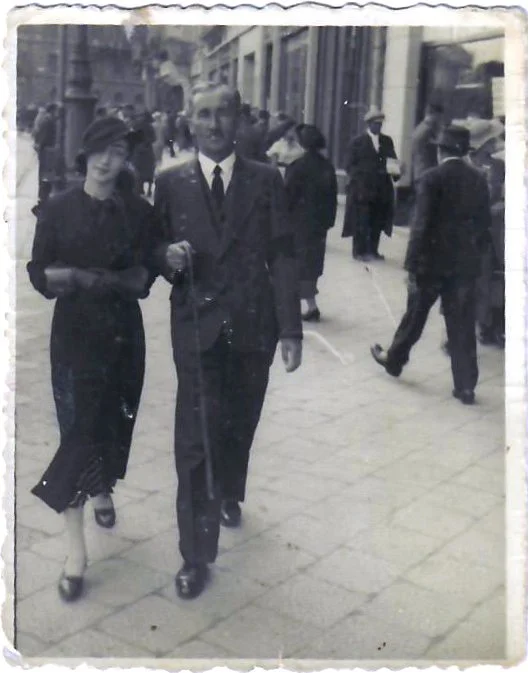
Janina and her father.
After the war, Janina left Lwów.
She had hidden from the Nazis by marrying Marian des Loges, her Polish-language teacher, who was 30+ years her senior. Janicki writes: she had been his favorite pupil “to such an extent that after her exams she married her professor.”
They moved to Gdańsk, where Janina was hired at Polish Radio. She was promoted to literary editor, and soon they offered her the station directorship. When des Loges heard this, he shouted: “Over my dead body!”
In 1949, Janina moved to Warsaw without de Loges. She worked in the Inspectorate of Regional Stations. Then, for more than a dozen years, she served as editor-in-chief of the weekly Radio i Telewizja.
That’s when the Americans started watching her. And so did the Communist Party.

Soon, she married Konrad Zawadzki.
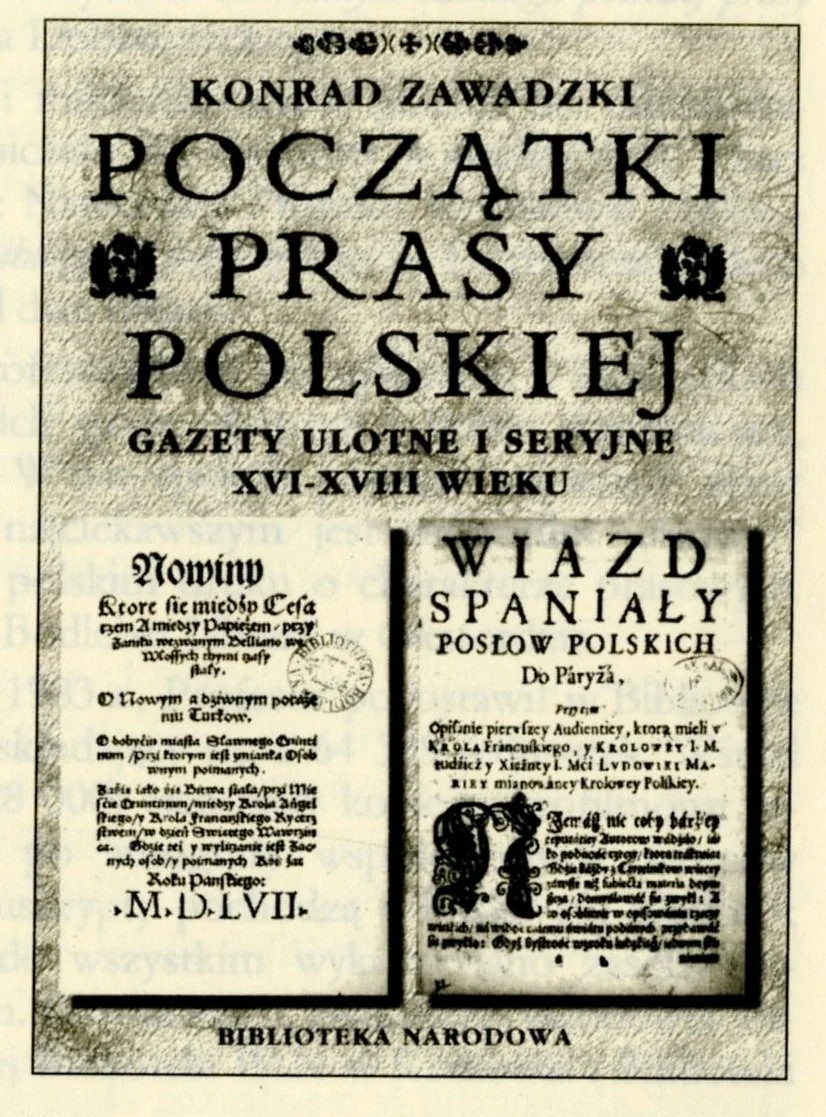
Konrad was a bibliographer, a press historian, and a varsavianist. He ran the Polish National Library’s Microfilm Collections Department. His career was dedicated to preserving the Polish press — he microfilmed more than 64,000 items, including the 1557 Nowiny, the earliest known press publication in the Polish language, from the Bodleian Library at Oxford. He published the first comprehensive bibliography of Warsaw periodicals.
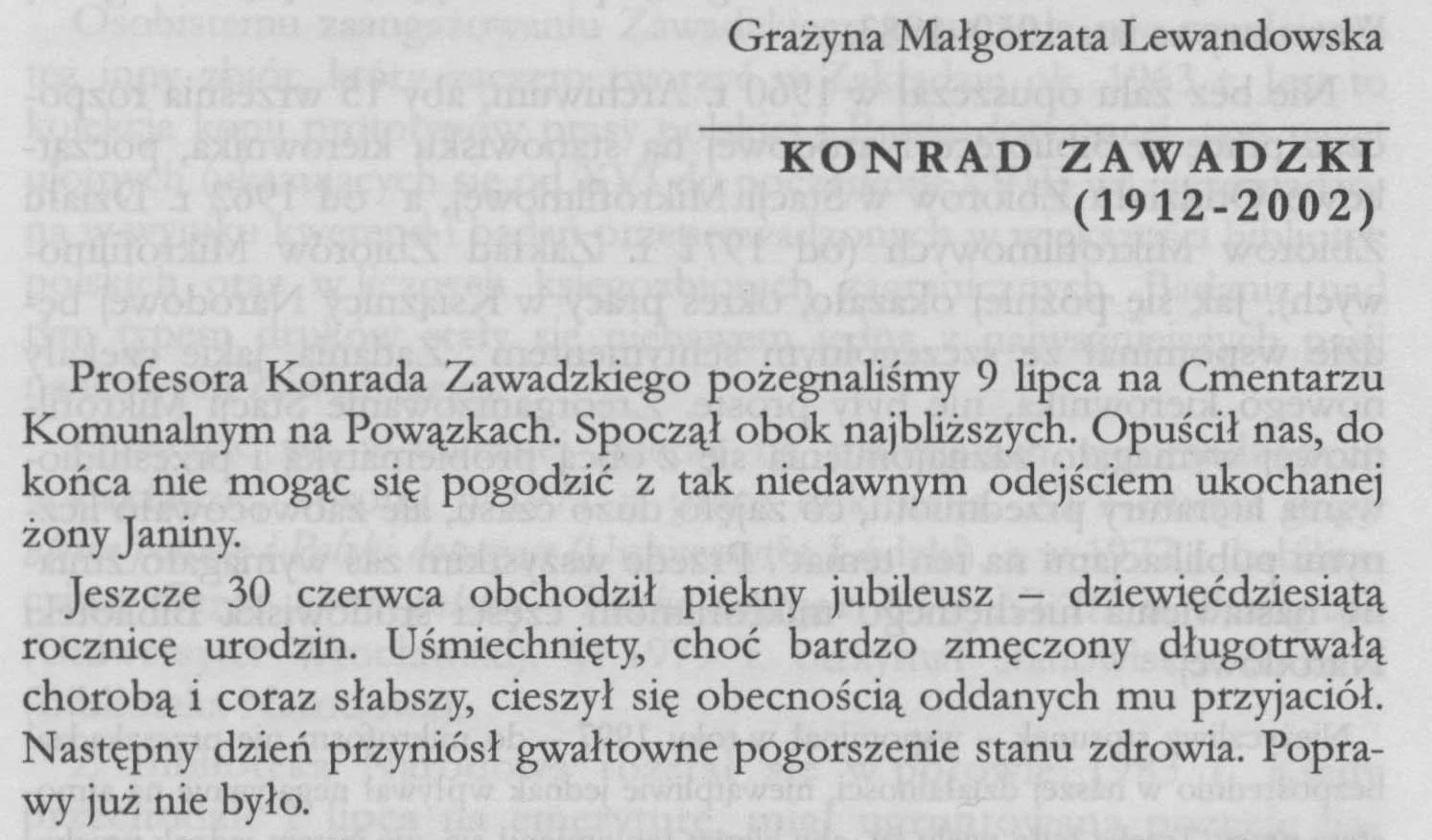
When he retired in 1983, the collection he built at the National Library was the largest microfilm archive in Poland.
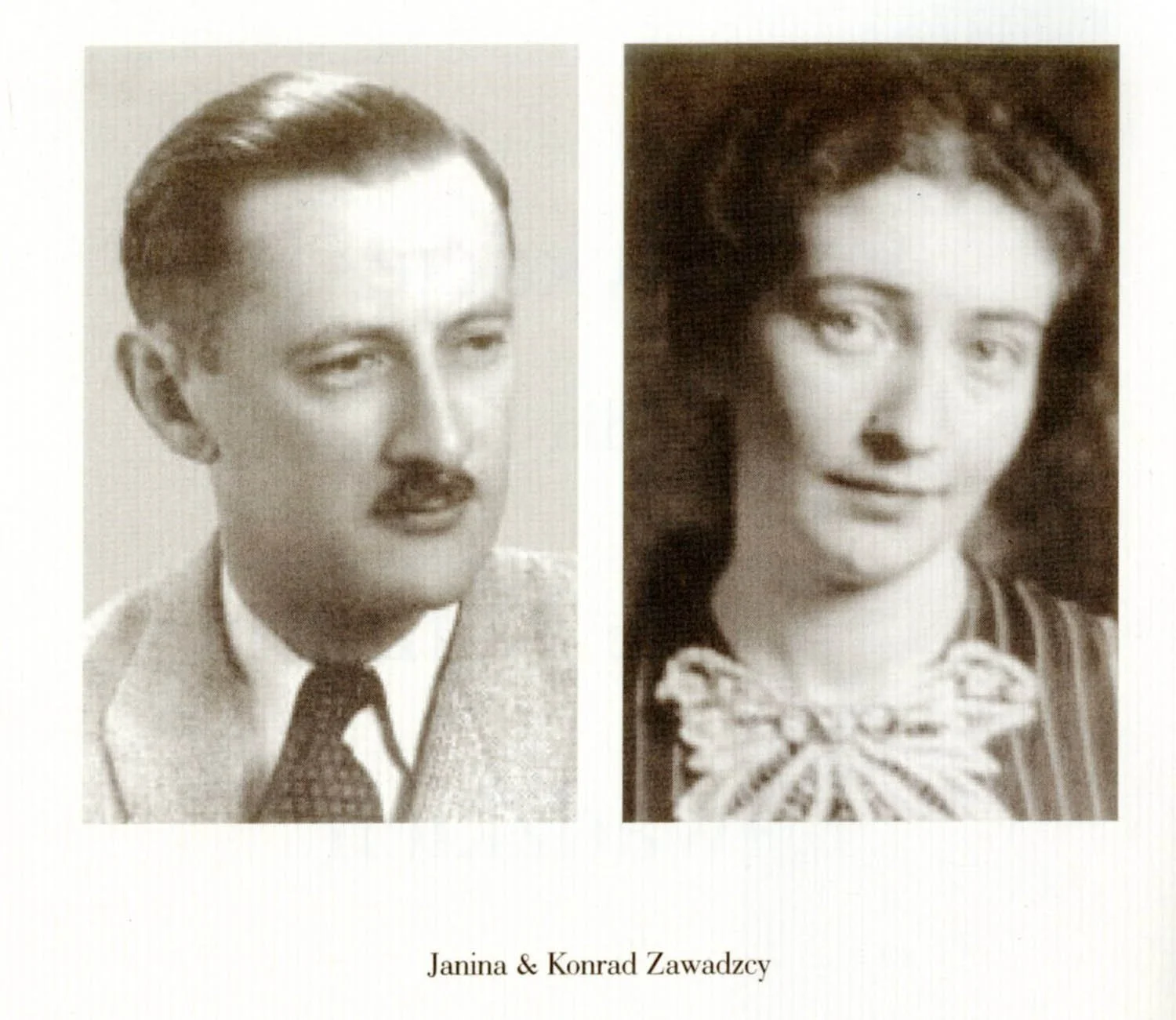
You wouldn't know, from their biographies, what either of them was hiding.
My Great Uncle Konrad was born in Warsaw in 1912. He studied law and economics in Antwerp and Warsaw. During the occupation, he worked as a laborer. After the war, he was appointed General Secretary of Polish Radio.
Konrad published eight books, and there are multiple biographies of him. When I contacted the National Library of Poland to try to understand what had happened to my great-aunt, they told me they had been searching for his copyright heir to obtain permission to digitize his works.
The person who can give permission, is my father. I called him to explain that a Polish government lawyer would be calling soon.
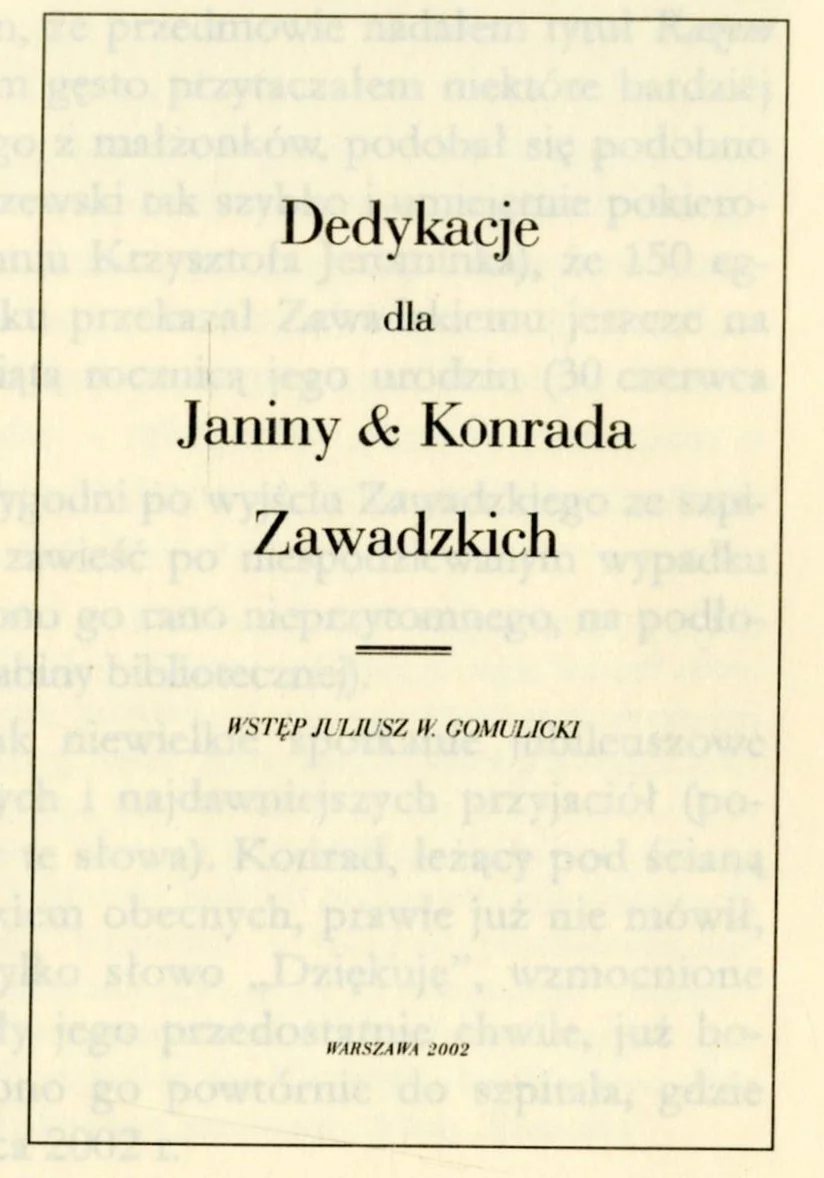
In 2002, Konrad published his final work, a book called Dedykacje dla Janiny & Konrada Zawadzkich.
Dedications for Janina and Konrad Zawadzki.
Janina died on September 13, 2001.
Konrad was devastated. A memorial essay describes how, after Janina’s death, “he was no longer able to work. He had only two desires: to honor her memory and to catalog his collections.”
Janina and Konrad had a great love. In his final months, Konrad decided that the best evidence of their story was the dedication pages their friends had written in the books they gave the couple.
His last work is a compilation of 187 handwritten inscriptions written in the books people gave him and Janina over their five shared decades. Konrad dedicated the book: “To the memory of my greatly beloved Wife Janina.”
Konrad commissioned an introduction for this compilation from Juliusz Wiktor Gomulicki, one of Poland’s most distinguished literary scholars.
Gomulicki dedicated a book in the collection “To Mrs. Janina Zawadzka, who reads poetry,” and apologized for “keeping Konrad waiting, who is tearing himself away to telephone you that he is already leaving.” He made similar comments on Konrad’s doting on his wife in multiple dedications, over fifty years.
Monika Żeromska — daughter of Stefan Żeromski, one of Poland’s greatest writers — left six dedications spanning 1981 to 1998. By 1993, she was calling them “the first good, patient, and well-disposed listeners, readers, and publishers of what I have written — dispersers of my doubts.”
Their neighbor, Roman Jasiński, dedicated a book “in memory of so many years of friendship” and signed himself “the fiddler from under the floorboards.” He added: “Please forgive a certain slovenliness in the dedication, but age does its work, and the hand shakes.”
Maria Kuncewiczowa, one of the twentieth century’s most important Polish novelists, called Janina her “sweet, blue-eyed and dark, Irish girl of Kazimierz.” Six months earlier in the pages of another book, she called both Janina and Konrad “Kazimierz-folk by choice and by rank.”
Kazimierz is Kraków’s Jewish quarter. Kuncewiczowa was not careless with words. She knew Yanina was secretly Jewish.
Gomulicki wrote:
“Ill in the last years of her life, and all the more in need of her husband's care, she died, almost suddenly, on September 13, 2001. When she was buried a week later at Wojskowe Powązki, I waited impatiently for someone's farewell voice, for I myself wanted to join in, but I was prevented from doing so by the too-quick commencement of the filling of the grave.”
Unlike Polish tradition, Jewish burials happen quickly.
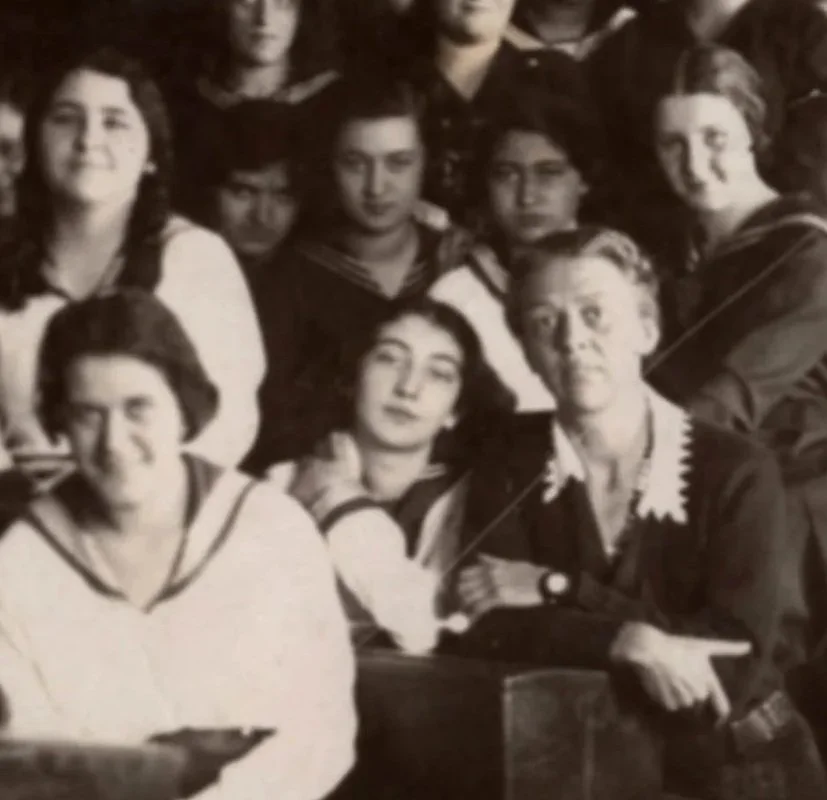
The school Janina graduated from before the war was the most elite for girls in Poland. It was also the only integrated school — all the other schools in Lwów were segregated. No Jews allowed.
I randomly selected one of the names on the back of her school photo, Erma Sobel.
I tracked her down in one of the research databases. Erma Sobel was murdered in a Nazi death camp.
I put the photograph down and closed my eyes.
I can’t bear to search for any more names. Not now, anyway.
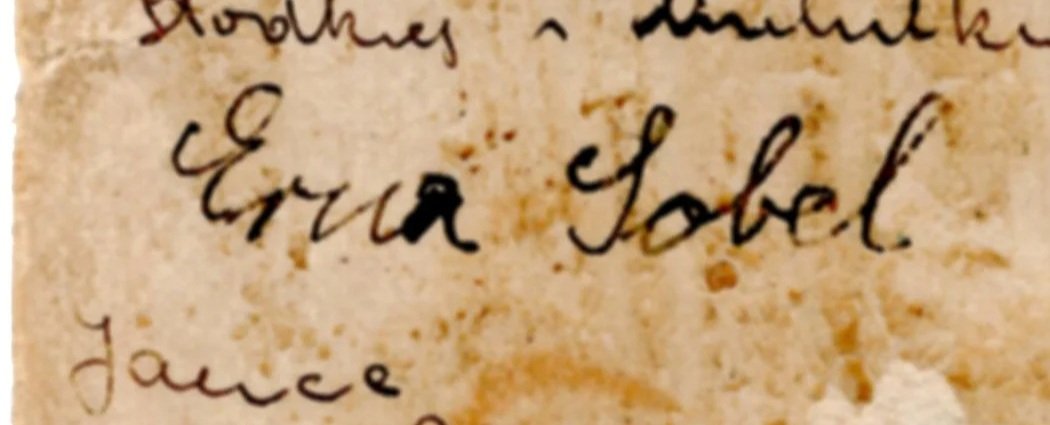
Yanina’s biographer described this photo on Yanina’s wall. She touched it as she spoke every name. I touched the photo’s edge, and promised my Aunt Yanina to protect it.
My Great-Aunt had a lovely home, full of books. Her husband adored her. He’d created an archive that proved they’d built a loving life.
She died suddenly, at home.
I dreamed she had pear trees in the park outside her window. I don’t know why.
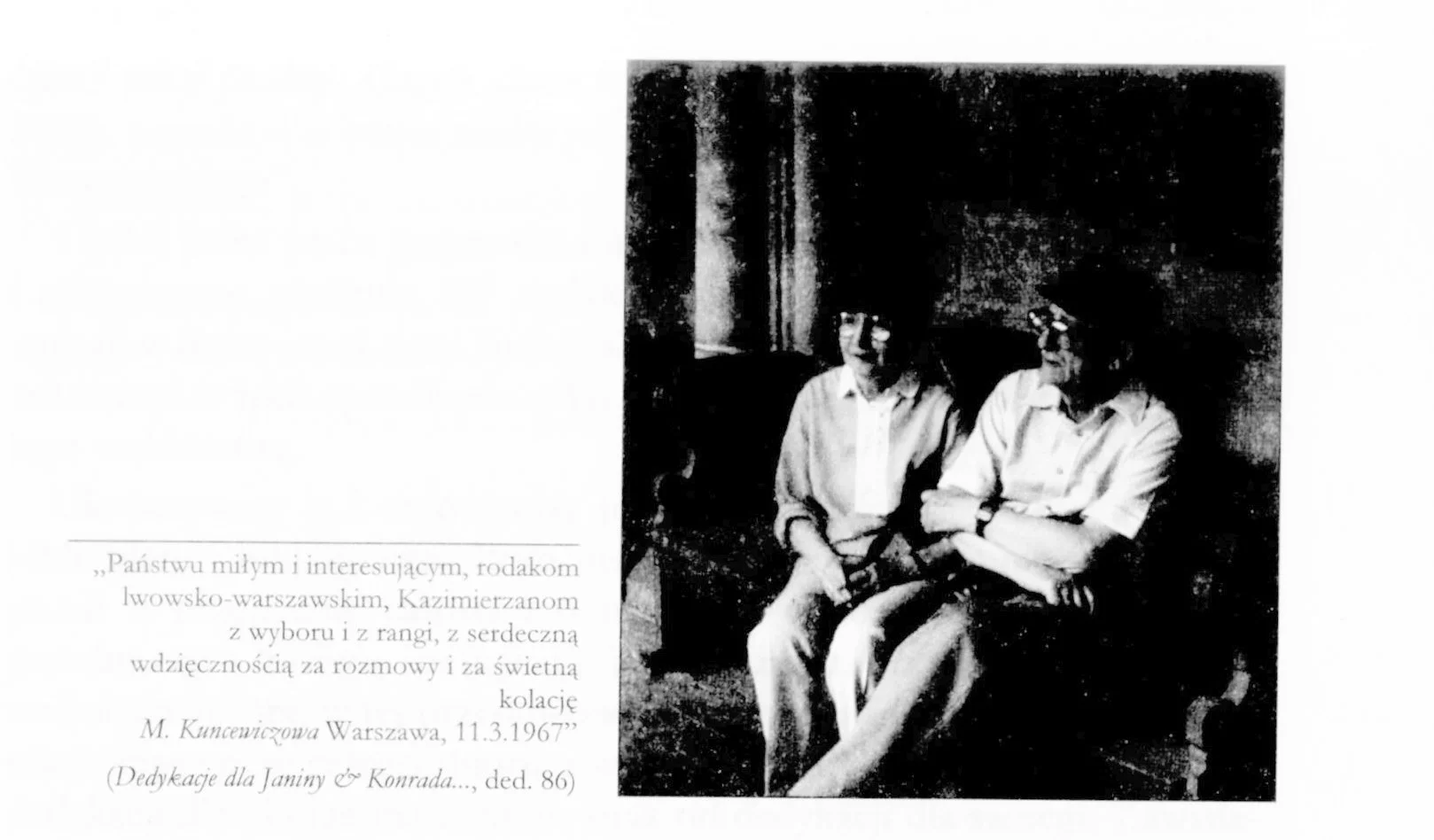
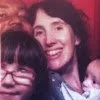
Konrad and Janina in their later years, from a biography of Konrad, courtesy of the Warsaw Public Library.
Żyją, wrote: "He couldn't live without his wife — he faded before everyone's eyes from the moment she died."
At his 90th birthday on June 30, 2002 Konrad smiling, exhausted as he presented the volume of Dedications to those present. The next day brought sudden deterioration. He died July 3, 2002.
The biographer wrote that after Janina died, Konrad “had only two desires: to honor her memory and to catalog his collections.”
The photographs I found in the box in my garage carry a consistent catalog number on the back. Primary and secondary number pairs — “141/38,” “104/27a,” “127/39a” — following a pattern: a primary number (album or category), a slash, and a secondary number (print or sequence). This is an archival filing system.
The archive contains photographs from Berlin, Munich, Zürich, Santiago, Holon, Warsaw, and Toms River, with inscriptions in Yiddish, Polish, German, Russian, Spanish, Hebrew, and English.
I believe Konrad finished this collection and sent it to my Grandpa Ben, Janina’s brother, before he passed away in 2002.
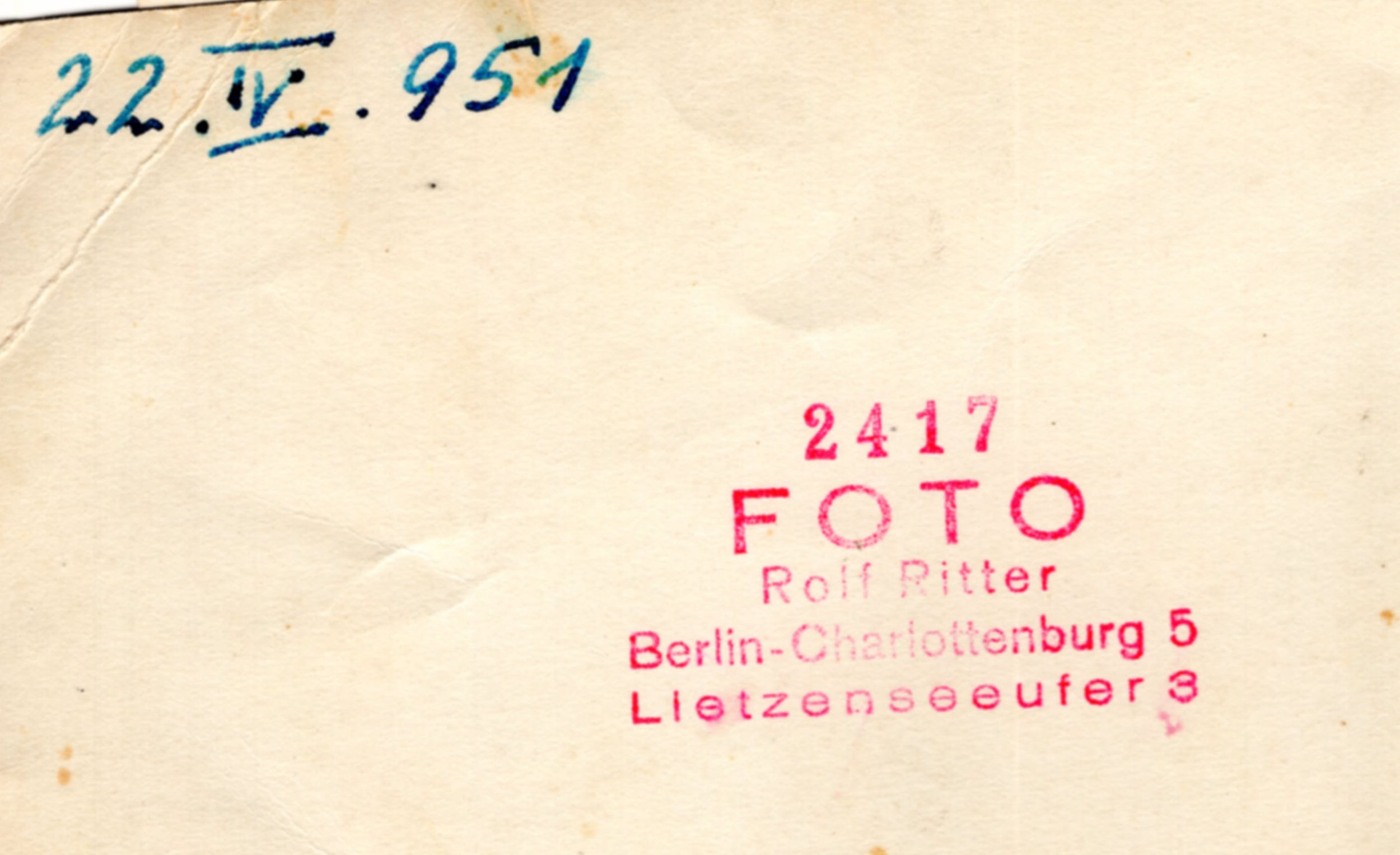
My grandpa Ben fell into a deep depression that same year and did not survive it.
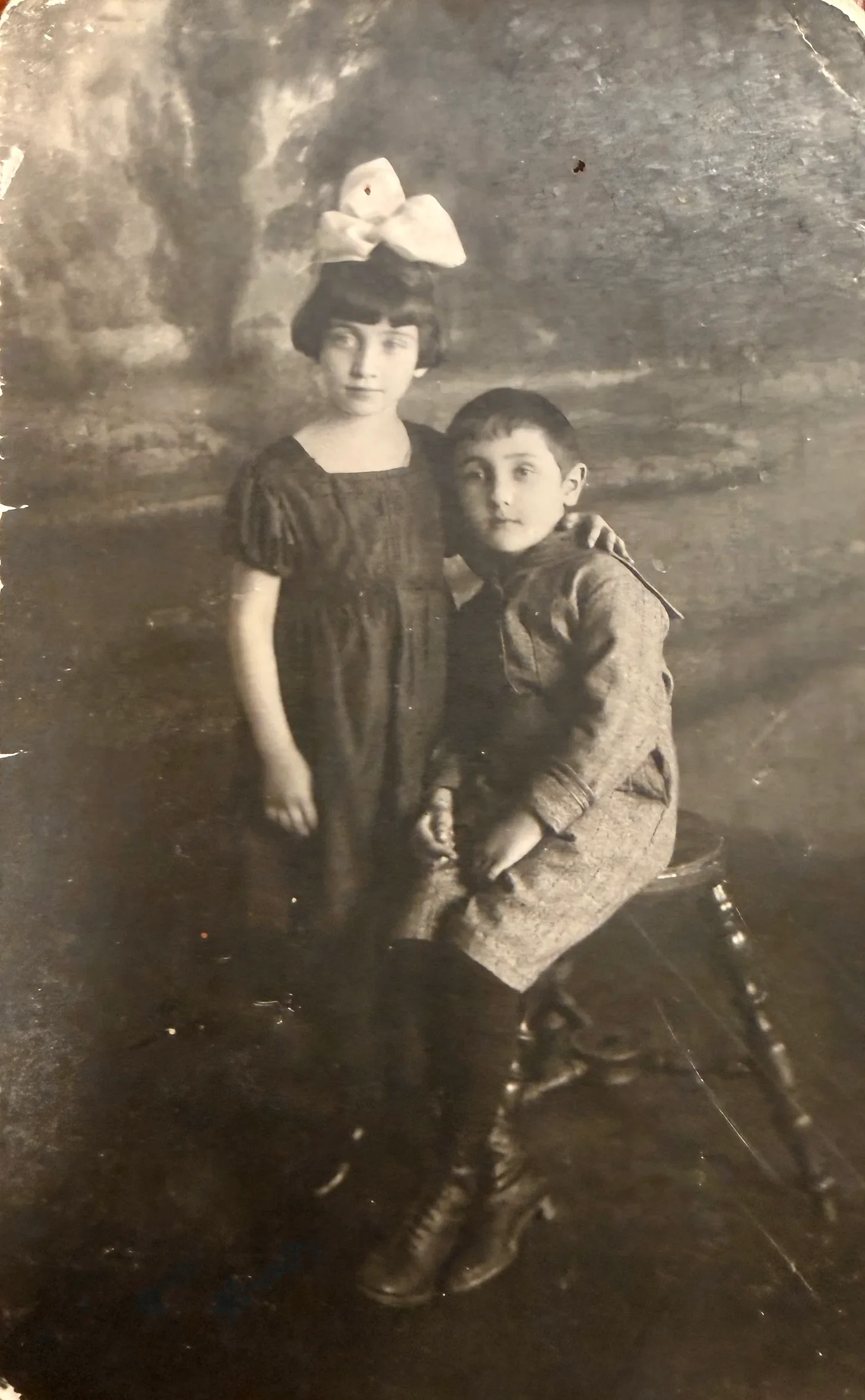
Janina and Ben, before the war.
This archive is now in a collection under my grandparents’ names at YIVO, the Center for Jewish History in New York City.